
 Español
 Português
  русский
  Français
  日本語
日本語  Deutsch
  tiếng Việt
  Italiano
  Nederlands
  ภาษาไทย
  Polski
  한국어
한국어  Svenska
  magyar
  Malay
Malay  বাংলা ভাষার
  Dansk
Dansk  Suomi
Suomi  हिन्दी
  Pilipino
  Türkçe
  Gaeilge
  العربية
  Indonesia
  Norsk
Norsk  تمل
تمل  český
český  ελληνικά
  український
  Javanese
  فارسی
فارسی  தமிழ்
தமிழ்  తెలుగు
  नेपाली
  Burmese
  български
  ລາວ
ລາວ  Latine
  Қазақша
  Euskal
  Azərbaycan
  Slovenský jazyk
  Македонски
  Lietuvos
  Eesti Keel
  Română
  Slovenski
  मराठी
मराठी  Srpski језик


When people think about folate during the periconceptional period, the first thing that comes to mind is preventing neural tube defects (NTDs). This has been a long-standing consensus and a prominent part of prenatal care. Yet few pause to consider that its role may extend beyond this single line of defense. Within the mosaic of balanced nutrition, it might also quietly influence a child’s future cognitive capacity and learning potential.
The Overlooked Potential of
Folate
In late 2019, Neurology published the NEAD study, offering a fresh
perspective: periconceptional folate supplementation could help lay a stronger
foundation for a child’s intelligence and learning ability.
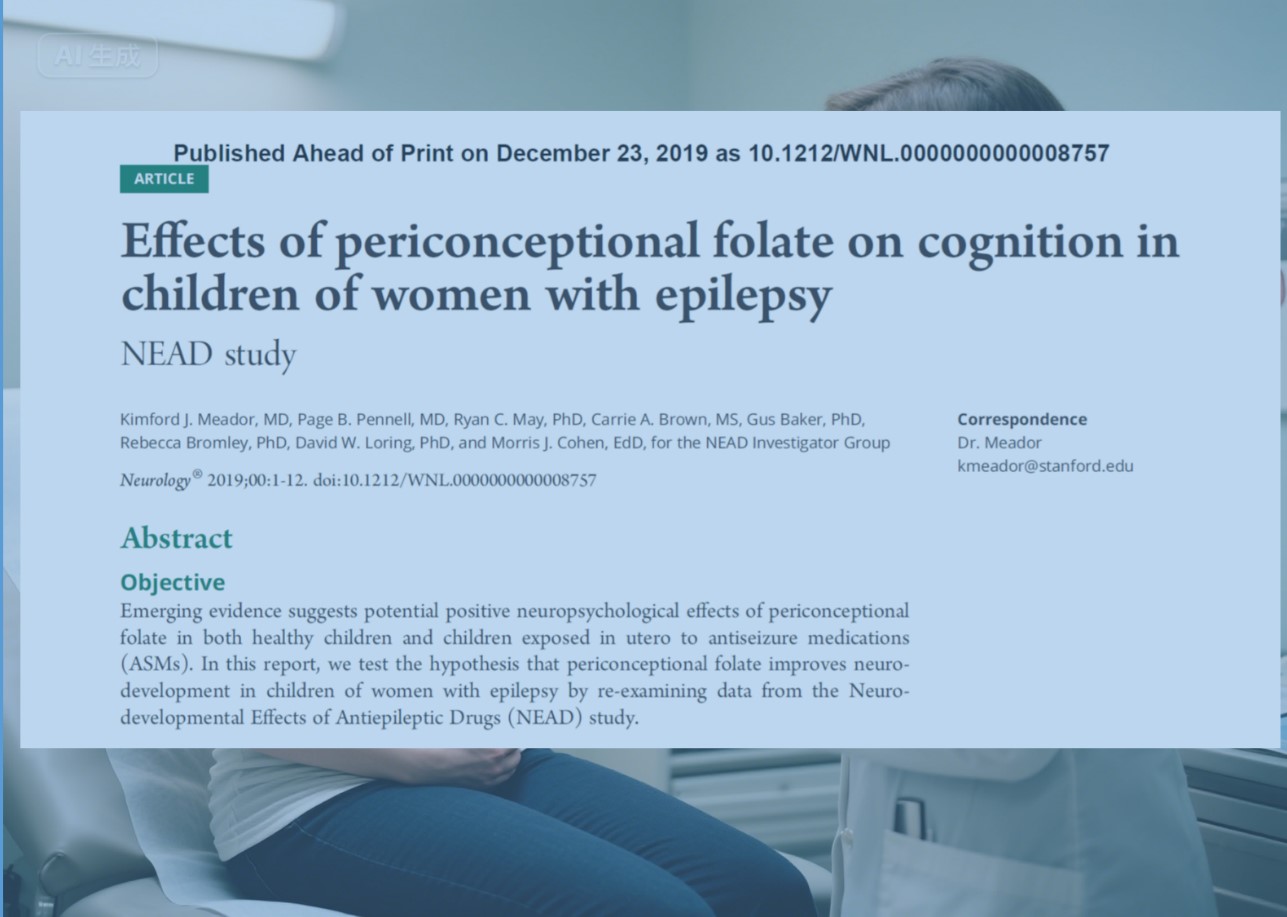
Supported by the U.S. National Institutes of Health, the NEAD study followed a unique group of mothers and children at 25 epilepsy centers across the United States and the United Kingdom from 1999 to 2004. All participating mothers were taking a single antiseizure medication, and their babies were enrolled at birth for ongoing observation.
Children underwent blinded neuropsychological assessments throughout development, tracked up to age six. Researchers observed an intriguing pattern: children of mothers who consistently took folate during the periconceptional period scored 5–6 points higher on full-scale IQ tests at both ages three and six, compared with those whose mothers did not supplement.
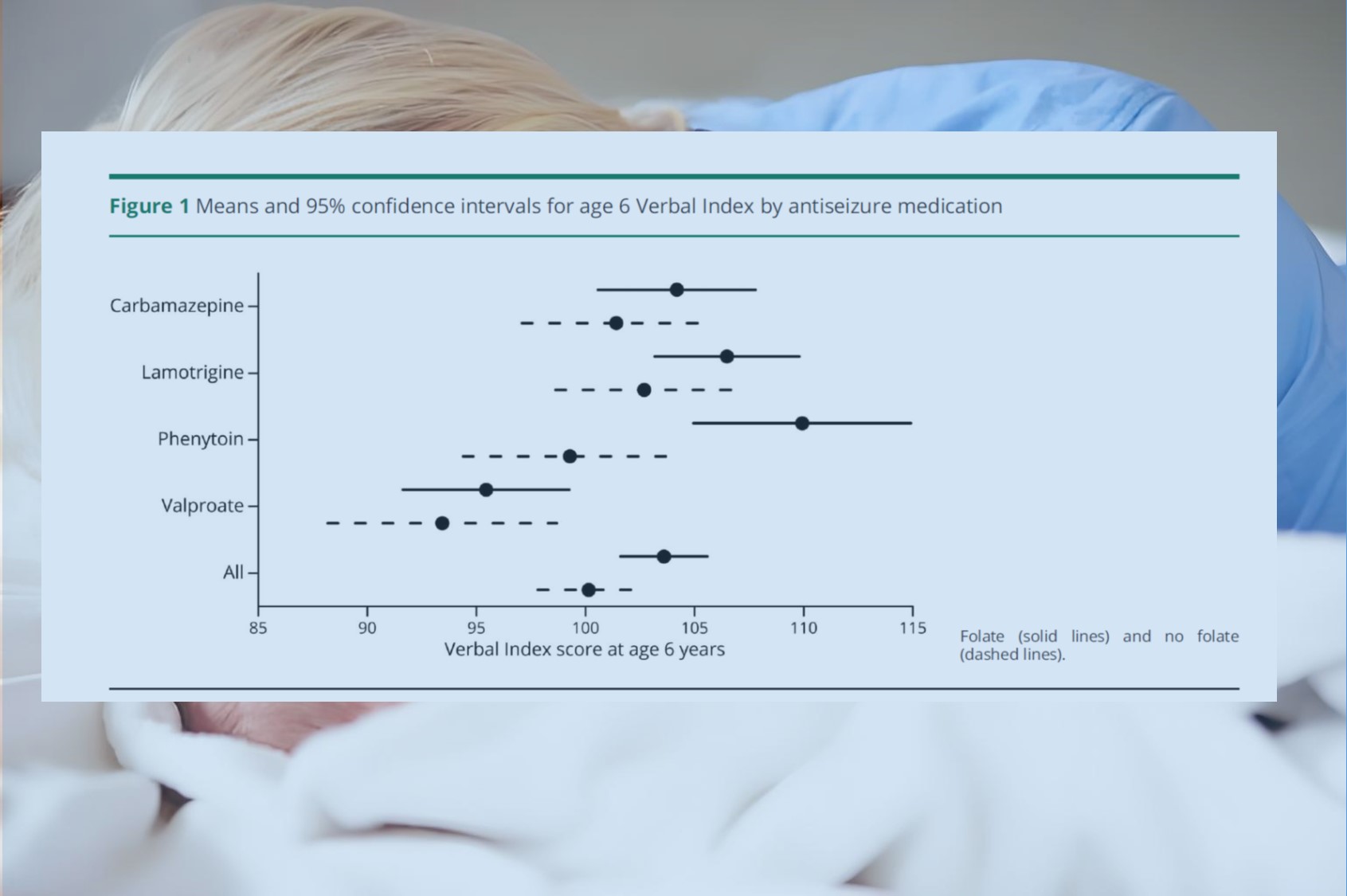
Children underwent blinded neuropsychological assessments throughout development, tracked up to age six. Researchers observed an intriguing pattern: children of mothers who consistently took folate during the periconceptional period scored 5–6 points higher on full-scale IQ tests at both ages three and six, compared with those whose mothers did not supplement.
Beyond the overall IQ advantage, benefits extended to multiple domains closely tied to learning — including nonverbal reasoning, expressive language, and executive function — and these differences persisted as children entered school. For pregnant women requiring long-term antiseizure medication, appropriate folate intake not only reduces fetal malformation risk but also supports more stable and successful learning trajectories for their children.
Even Large Amounts of “Folate” Don’t Guarantee
Effectiveness for Everyone
Ordinary synthetic folic acid must be converted by the body’s MTHFR enzyme into
its active form — 6S-5-methyltetrahydrofolate — before it can be absorbed and
utilized. Any folic acid that remains unconverted accumulates as Unmetabolized
Folic Acid, potentially posing health risks to both mother and fetal
development.
In China, 78.4% of the population exhibits reduced MTHFR enzyme activity affecting folate metabolism. Genotype variations (e.g., C677T, A1298C) correlate with differing enzyme efficiencies: roughly 21.6% have normal activity, 65% have intermediate activity (with elevated homocysteine risk), and about 13.8% show poor activity with higher risk.

This reality calls for an active folate — 6S-5-methyltetrahydrofolate — that bypasses MTHFR dependence and can be directly absorbed. Magnafolate (chemical name: calcium salt of 6S-5-methyltetrahydrofolate) offers a solution closer to physiological uptake. As the biologically active form of folate, it enters the system without metabolic bottlenecks.

A patented crystalline form C developed by Jinakng Hexin Pharmaceutical ensures stability and controlled release during storage and use. Toxicological studies classify its safety as practically non-toxic, making it especially gentle for hormone-sensitive pregnant and infant populations. Clinical data confirm that Magnafolate raises serum and erythrocyte folate levels rapidly, meeting periconceptional and fetal developmental needs more quickly.
For women planning pregnancy, managing epilepsy with medication during gestation, or concerned about personal folate metabolism status, Magnafolate may provide the cognitive protection suggested by the NEAD findings, while also delivering safety, efficiency, and individualized suitability.
The Significance of Periconceptional Folate Is
Repeatedly Confirmed
We are coming to understand that scientific supplementation is not just about
“what” to take, but also “how” and “whether it suits you.”
Magnafolate, crafted through rigorous patent technology and quality standards, represents a safer folate option. It allows us to embrace the promise of the future with greater peace of mind.

Note: Pregnant women should follow medical advice when supplementing folate.
Reference:
[1] Meador KJ, Pennell PB, May RC, et al. Effects of periconceptional folate on
cognition in children of women with epilepsy: NEAD study. Neurology. 2019 Dec
23. doi:10.1212/WNL.00000000000008757
[2] Lian Zenglin, Liu Kang, Gu Jinhua, Cheng Yongzhi. Biological
characteristics and applications of folate and 5-Methyltetrahydropteroic acid.
*China Food Additives*, 2022(2): 229–238.
[3] Gu, R., Qi, D. Rapid Improvement with Crystal Form C of L-5-Methyltetrahydrofolate Calcium Salt in Maternal Women with Folate Deficiency: A Pilot Study, J of Gyne Obste & Mother Health, 2024,2(6), 01-04.


 Online Service
