
 Español
 Português
  русский
  Français
  日本語
日本語  Deutsch
  tiếng Việt
  Italiano
  Nederlands
  ภาษาไทย
  Polski
  한국어
한국어  Svenska
  magyar
  Malay
Malay  বাংলা ভাষার
  Dansk
Dansk  Suomi
Suomi  हिन्दी
  Pilipino
  Türkçe
  Gaeilge
  العربية
  Indonesia
  Norsk
Norsk  تمل
تمل  český
český  ελληνικά
  український
  Javanese
  فارسی
فارسی  தமிழ்
தமிழ்  తెలుగు
  नेपाली
  Burmese
  български
  ລາວ
ລາວ  Latine
  Қазақша
  Euskal
  Azərbaycan
  Slovenský jazyk
  Македонски
  Lietuvos
  Eesti Keel
  Română
  Slovenski
  मराठी
मराठी  Srpski језик


Two years after menopause, Aunt Smith pores over each set of test results, her eyes lingering on the cardiovascular page. Just when her blood pressure seemed stable, her latest exam showed elevated homocysteine (HCY). Her doctor explained, “High HCY damages the vascular endothelium and increases cardiovascular risk,” leaving her worried.
She had never stopped taking calcium tablets or multivitamins, but when she considered adding folate to lower HCY, friends warned, “With slower metabolism at your age, ordinary folic acid isn’t absorbed — it’s just wasted money.” Torn between acting and doing nothing, she felt stuck.

This dilemma is common in clinical practice. Many postmenopausal women hesitate to supplement nutrients, fearing ineffectiveness. The real issue often isn’t the dose, but the form of folate — closely tied to postmenopausal metabolic changes.
After menopause, shifting hormone levels make HCY prone to rise. This compound directly injures vascular endothelial cells, like fine sand constantly abrading the vessel wall. Over time, vessel elasticity declines, metabolic burden increases, and cardiovascular disease risk climbs significantly.
Folate is essential for metabolizing HCY. It clears this “hidden vascular threat,” reducing endothelial damage and serving as vital nutritional support for postmenopausal vascular health.
The protective role of folate supplementation in postmenopausal cardiovascular health is firmly backed by international research.
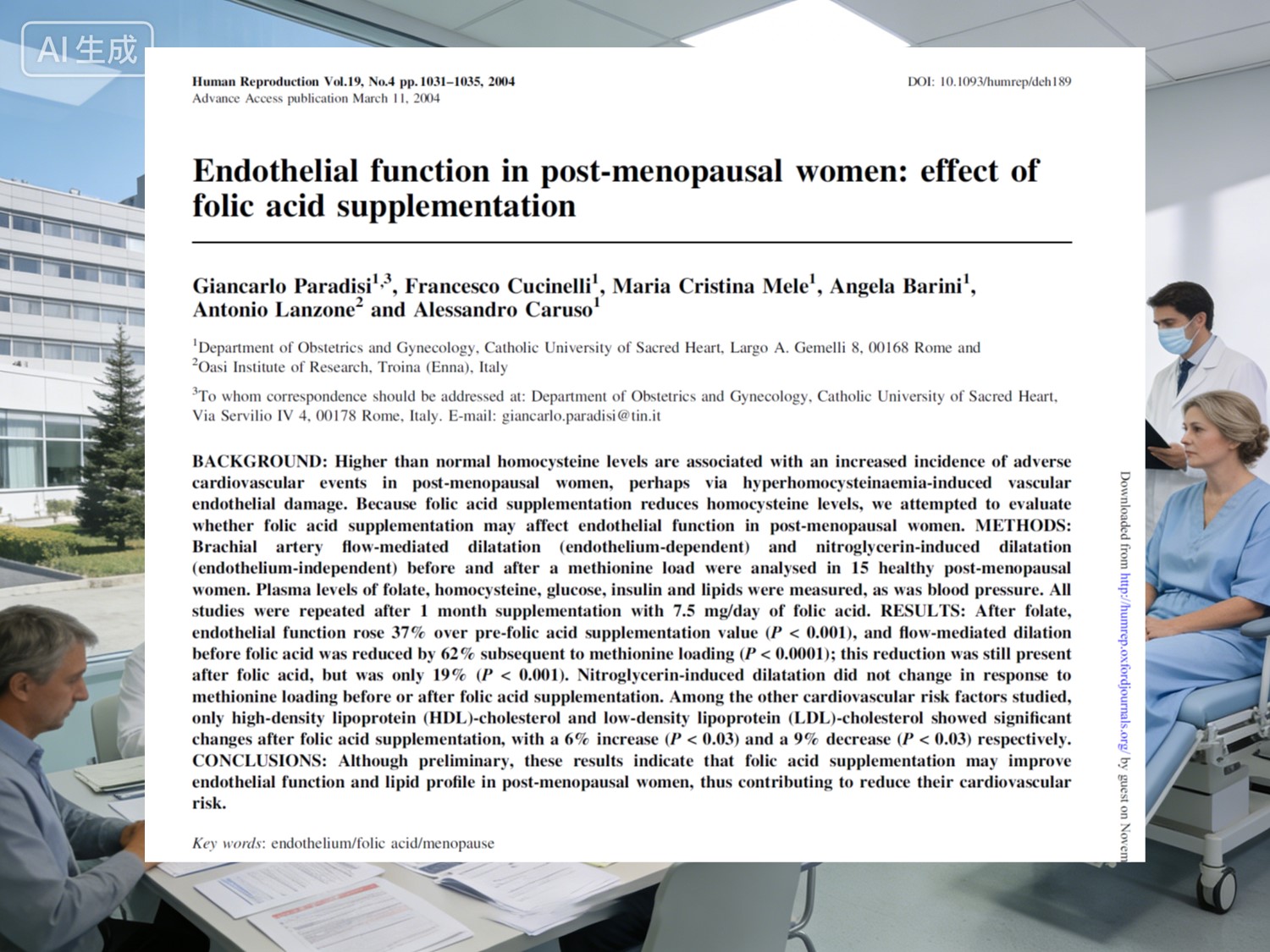
A landmark 2004 study published in Human Reproduction (IF 6.1) by Giancarlo Paradisi, Francesco Cucinelli, and colleagues focused specifically on postmenopausal women. Fifteen healthy participants, representative of typical postmenopausal status, took 7.5 mg/day of folic acid for one month. Results showed marked improvements:
1. Endothelial function rose by 37% (P<0.001), indicating restored elasticity and vitality in aging vessels.
2. Under a methionine load (simulating dietary metabolic stress), the drop in endothelial function fell from 62% (P<0.0001) before supplementation to 19% (P<0.001) after — a major boost in resilience against metabolic injury.
3. Lipid profile improved: HDL-cholesterol increased 6% (P<0.03), LDL-cholesterol decreased 9% (P<0.03), fostering a healthier intravascular environment.
These findings confirm that postmenopausal folate supplementation is evidence-based, yet choosing the correct folate form is the cornerstone of effectiveness.
The most frequent mistake in clinic: focusing on dosage while ignoring actual absorption efficiency.
Ordinary synthetic folic acid must be converted by the body’s MTHFR enzyme into its active form before the body can use it to metabolize HCY. But postmenopausal women experience a notable decline in MTHFR enzyme activity due to age and hormonal shifts. This “key metabolic enzyme” works less efficiently, so synthetic folic acid often remains unactivated, offering no vascular benefit and possibly creating unnecessary metabolic strain — explaining why many say “taking folic acid is pointless.”
Effective nutrition hinges on absorption, not merely quantity. For postmenopausal women, the priority is not increasing dose, but choosing active folate that bypasses MTHFR metabolism and is directly usable — delivering precise action without waste.

Magnafolate®, a 6S-5-methyltetrahydrofolate calcium (Crystalline Active Folate), meets this core clinical need. As an inherently active folate, it requires no MTHFR enzyme metabolism and enters the body ready for immediate use, swiftly joining the HCY breakdown pathway to clear this “silent abrasive” of vessels. It rapidly raises serum folate levels, enabling timely, targeted vascular protection perfectly suited to postmenopausal enzymatic changes, thereby eliminating the “supplement but not absorb” problem.
Moreover, Magnafolate® reaches actual non-toxic safety levels, with proven bioavailability and safety data, making it especially suitable for special populations like postmenopausal women.
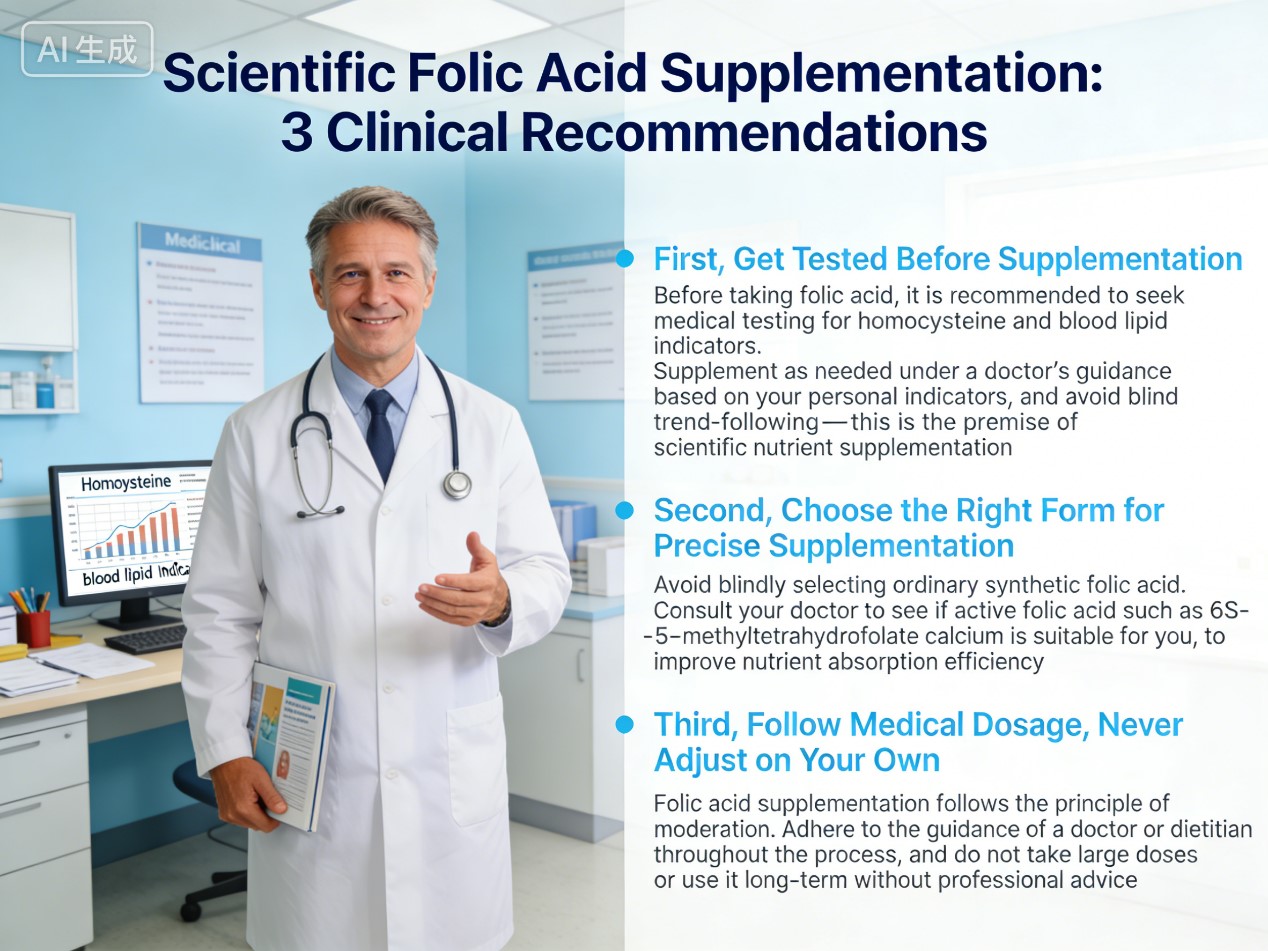
Postmenopausal health lies in scientific details. Vascular health underpins wellness in midlife and beyond. In folate supplementation, form matters more than amount. Aligning with your metabolism ensures folate becomes a true “gentle protective layer” for vessels, giving you stronger health assurance.
Compliance Statement
Magnafolate® is supplied solely as an active folate raw ingredient
(6S-5-methyltetrahydrofolate calcium) and does not directly diagnose or treat
patients. All folate supplementation decisions must be made under professional
medical/nutritional supervision.
References
1. Paradisi G, Cucinelli F, Mele MC, et al. Endothelial function in post-menopausal women: effect of folic acid supplementation. Human Reproduction. 2004;19(4):1031‑1035.
Lian ZL, Liu K, Gu JH, Cheng YZ, et al. Biological characteristics and applications of folate and 5‑methyltetrahydrofolate. China Food Additives. 2022;(2).


 Online Service
