
 Español
 Português
  русский
  Français
  日本語
日本語  Deutsch
  tiếng Việt
  Italiano
  Nederlands
  ภาษาไทย
  Polski
  한국어
한국어  Svenska
  magyar
  Malay
Malay  বাংলা ভাষার
  Dansk
Dansk  Suomi
Suomi  हिन्दी
  Pilipino
  Türkçe
  Gaeilge
  العربية
  Indonesia
  Norsk
Norsk  تمل
تمل  český
český  ελληνικά
  український
  Javanese
  فارسی
فارسی  தமிழ்
தமிழ்  తెలుగు
  नेपाली
  Burmese
  български
  ລາວ
ລາວ  Latine
  Қазақша
  Euskal
  Azərbaycan
  Slovenský jazyk
  Македонски
  Lietuvos
  Eesti Keel
  Română
  Slovenski
  मराठी
मराठी  Srpski језик


At 48, Lao Ma always thought osteoporosis was something only the elderly worried about. That changed early this year during his company’s fun run. After jumping twice on an acupressure mat, he felt a sharp pain in his heel. A hospital check showed his bone mineral density T-score was -2.1, close to the osteoporosis diagnostic threshold.
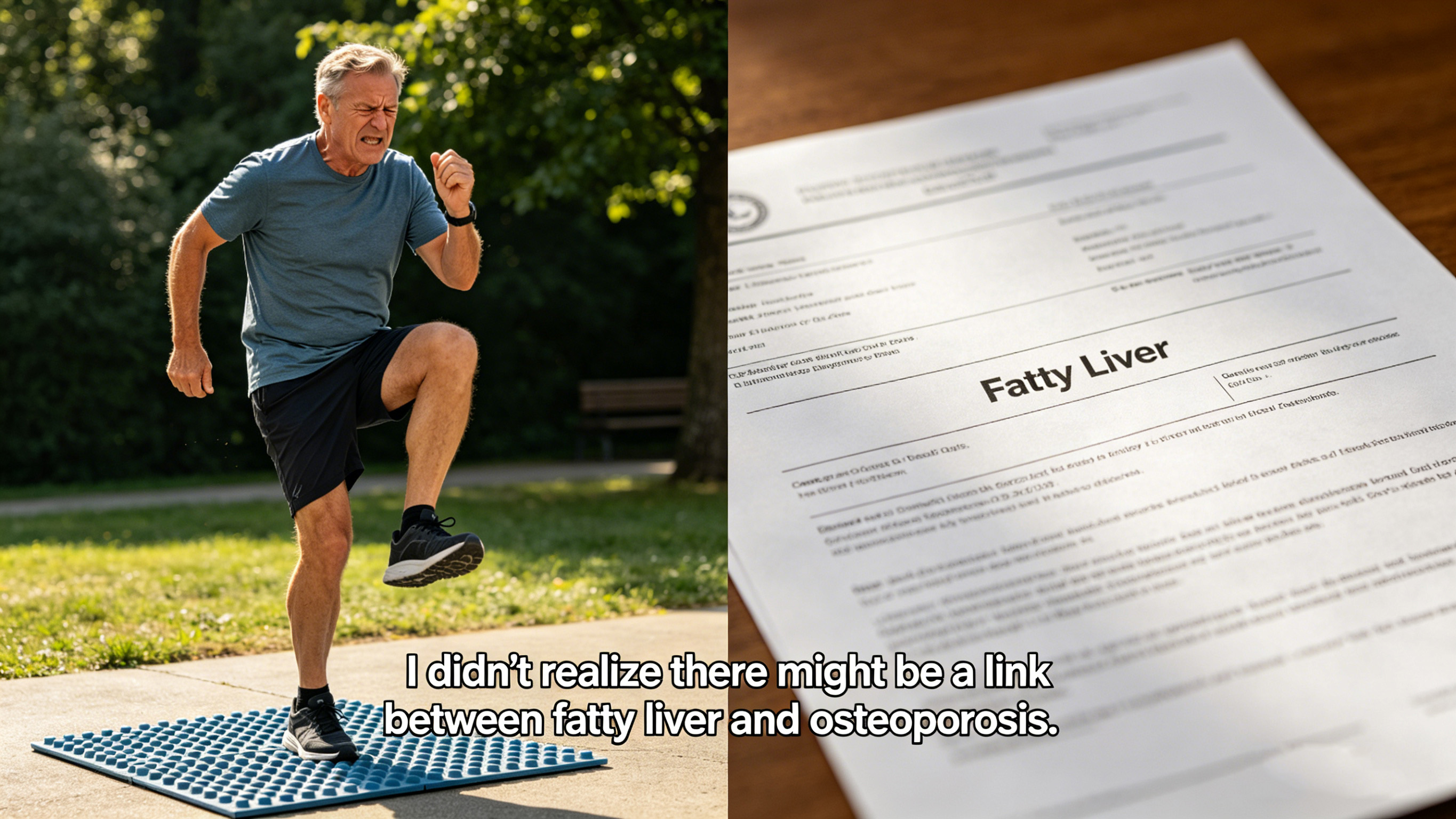
Lao Ma decided he needed more calcium. But after reviewing his years of medical records, the doctor sighed and pointed to his mild fatty liver.
“Your bone problem is probably linked to your fatty liver. Have you checked your folate level?”
Lao Ma froze.
“Folate… isn’t that just for pregnant women?”
The doctor didn’t explain right away and simply ordered a blood test. When Lao Ma returned to the clinic with the lab report, his anxious wife followed him in. The doctor pulled up his historical data on the computer: his blood lipid levels had hovered near the borderline for years, and fatty liver had persisted all along.
“Frequent social dinners, rich and oily food, unimproved blood lipids—your bones will suffer sooner or later.”
Lao Ma sat up straight to argue.
“Cardiovascular health, liver health, and bone health are separate, right?”
His wife poked him impatiently.
“Stop interrupting. Listen to the doctor.”
The doctor shook his head.
“The body doesn’t work in separate compartments. Recent research confirms that metabolic disorders caused by fatty liver and high-fat diets do weaken bones. Folate likely plays a key protective role in this process.”
Back home, Lao Ma immediately searched online for “folate and osteoporosis.” He found a professional research paper.
What did a 2022 study reveal?
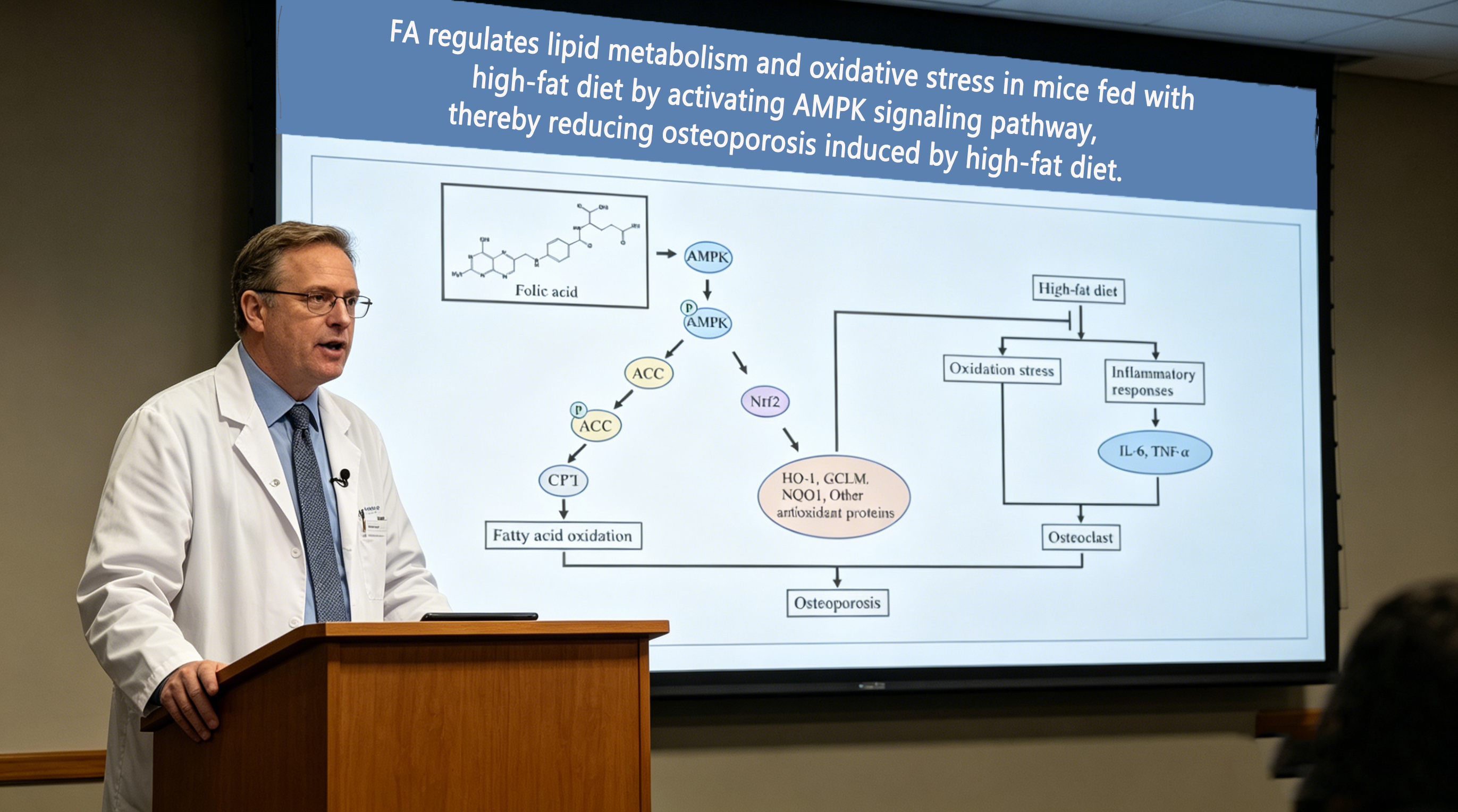
In 2022, *Frontiers in Cell and Developmental Biology* published a study titled *Folic Acid Attenuates High-Fat Diet-Induced Osteoporosis Through the AMPK Signaling Pathway*. Simply put, a high-fat diet weakens bones, and folic acid can alleviate this process via the AMPK pathway.
The experiment was rigorous. Researchers fed mice a high-fat diet to induce obesity, insulin resistance, and subsequent osteoporosis. The mice were divided into two groups: one received folic acid intervention, and the other did not (control group).
The team measured body composition, analyzed serum markers, used micro‑CT for 3D imaging of bone microstructure, and recorded protein expression changes in bone tissue for in‑depth analysis.
The results came in three steps.
Step 1: Metabolic changes were observed
Mice supplemented with folic acid had lower body fat percentage, improved insulin resistance, reduced inflammatory factors, and better blood lipid profiles. This was not surprising: folic acid regulates lipid metabolism and has antioxidant effects, as documented in previous studies. The paper further tested whether improved metabolism benefits bone health.
The answer: yes.
Step 2: Bone responded positively
This was critical. Using micro‑CT, the team created 3D images of mouse femurs and lumbar vertebrae at the micrometer level. Results showed that folic acid supplementation increased trabecular bone count, densified overall structure, and improved connectivity. Osteoclasts—cells that break down bone—decreased in number. Fat cells in the bone marrow also declined.
Bone marrow contains fat. There are two main types: red marrow (for blood production) and yellow marrow (for energy storage). Red marrow predominates in youth; with age or metabolic disorders, yellow marrow replaces red marrow. Increased marrow fat worsens bone quality in an inverse relationship. In this study, folic acid achieved dual effects: better bone structure and less marrow fat, creating a synergistic benefit.
Step 3: The AMPK pathway was identified
This was the most valuable part of the paper. After folic acid intervention, phosphorylation of AMPK was significantly elevated in bone tissue.
AMPK stands for Adenosine Monophosphate‑Activated Protein Kinase. Think of it as the cell’s master energy switch. When cells lack energy or face stress, AMPK is activated to coordinate downstream responses.
Folic acid turns on this switch. Once activated, several changes occurred:
- CPT1 levels rose: this enzyme allows fatty acids to enter mitochondria for burning, boosting fat metabolism.
- Nrf2 levels rose: this regulator controls the antioxidant defense system and activates antioxidant genes.
The full mechanism:
High‑fat diet → lipid metabolic disorder → increased oxidative stress → overactive osteoclasts and suppressed osteoblasts → marrow fat accumulation → fragile bones.
Folic acid activates AMPK → normalizes lipid metabolism via CPT1 → enhances antioxidant capacity via Nrf2 → improves metabolic environment → protects bones.
The authors used cautious wording in the discussion: This study provides experimental evidence for preventing high‑fat diet‑induced osteoporosis. They did not claim folic acid cures osteoporosis or extrapolate directly to humans. Such caution is standard for animal studies.
From the study to Lao Ma’s situation
Lao Ma printed the paper and compared it with his medical reports. Though not medically trained, he understood three key points:
1. Long‑term high‑fat eating and fatty liver created a high‑risk metabolic state matching the study.
2. The animal study provided a plausible logical chain: high‑fat diets cause systemic metabolic disorders linked to bone loss.
3. Folate may act protectively in this process.
Lao Ma decided to learn more about folate.
A few days later, he had to attend a business dinner. He drank only tea and picked only vegetables. His business partner, President Wang, was confused.
“Lao Ma, you’ve changed. Try some braised pork.”
Lao Ma waved his hand.
“No, I’m watching my diet. My lab results are not good.”
Wang put a piece of meat in Lao Ma’s bowl.
“Nonsense, you need good food to get better. Life is about eating and drinking.”
Lao Ma moved the meat to his plate and asked:
“President Wang, is your homocysteine level high on your checkup?”
Wang was stunned.
“What’s that? Never heard of it.”
Lao Ma explained:
“That marker is related to folate metabolism.”
Wang laughed.
“You’re obsessed. Drink up!”
Lao Ma quietly switched from alcohol to tea.
You may be supplementing folate incorrectly
Instead of buying random supplements, Lao Ma called his cousin, a pharmacist at a top‑tier hospital.
“Why are you asking about folate? Your wife isn’t pregnant.”
“I have low bone density. The doctor linked it to metabolism. Will those cheap bottles from the pharmacy work?”
His cousin explained:
“The cheap ones are folic acid, which has no biological activity. It must pass through the liver and be converted by dihydrofolate reductase and 5,10‑methylenetetrahydrofolate reductase (MTHFR) into 5‑methyltetrahydrofolate before the body can use it.”
“What’s wrong with that?”
“The problem is the key enzyme: MTHFR. A large portion of Chinese people—about 40% to 60%—carry MTHFR gene variants that reduce conversion efficiency to varying degrees.”
“So what happens?”
“You take a lot of folic acid pills, but little gets absorbed. Homocysteine stays high. Worse, unmetabolized folic acid builds up in the blood and becomes a burden.”
“What’s the solution?”
“Take active folate directly—products labeled 6S‑5‑methyltetrahydrofolate calcium. It absorbs directly into the folate cycle without needing MTHFR conversion.”
After hanging up, Lao Ma searched for the key terms.
He soon found Lianyungang Jinkang Hexin Pharmaceutical Co., Ltd. and its brand Magnafolate®. The company is an early pioneer in active folate raw materials in China, holding the world’s largest patent portfolio for active folate. Its raw material is 6S‑5‑methyltetrahydrofolate calcium produced via patented Form C crystal technology.
What is Form C crystal?
Active folate has an inherent weakness: instability. It is sensitive to moisture and easily degrades under normal conditions, shortening shelf life and reducing quality.
Magnafolate® Form C technology solves this problem. By rearranging the crystal structure, it achieves over 48 months of stability at room temperature. Without stable raw materials, large‑scale food industry production and distribution are impossible. The technology has passed comprehensive toxicological safety assessments, graded practically non‑toxic by Shanghai CDC, and is supported by more than 40 global invention patents.
Lao Ma sent the information to his wife.
She replied:
“Stop researching alone. I’ll ask where to buy finished products.”
If future clinical studies confirm that folate affects bone health via the AMPK pathway, stable, safety‑assessed active folate raw materials that require no human conversion will benefit both food companies and consumers.
Risk Warning (Please Read Carefully)
This study was conducted on animals; conclusions cannot be directly extrapolated to humans.
Limitations of the study:
1. The subjects were rodents, whose metabolism and bone physiology differ from humans.
2. No human safety evaluation or dose‑response efficacy verification was performed.
3. The role and regulatory mechanism of the AMPK pathway in human bone remain unclear and require further clinical research.
4. The dose‑effect relationship of folate supplementation on human bone health is not yet established.
Osteoporosis has multiple causes. Calcium intake directly affects bone health, as do hormonal changes and daily exercise habits. Folate is only one potential factor and cannot replace other bone health management measures.
Patients with confirmed low bone density should consult an orthopedist and follow medical advice. Do not use dietary supplements as a substitute for medical treatment.
Disclaimer
Magnafolate® is supplied only as a raw material of 6S‑5‑methyltetrahydrofolate calcium (active folate). It does not provide diagnostic or therapeutic advice directly to consumers. Any supplementation decision should be made under professional medical guidance.
Note: The story in this article is fictional, based on common scenarios and research cases for scientific communication; it does not represent real individual experience. This product is a food raw material and is not a substitute for medicine.
References
[1] Folic Acid Attenuates High-Fat Diet-Induced Osteoporosis Through the AMPK Signaling Pathway. Frontiers in Cell and Developmental Biology, 2022, 10:814741. DOI: 10.3389/fcell.2022.814741
[2] Lian Zenglin, Liu Kang, Gu Jinhua, Cheng Yongzhi, et al. Biological Characteristics and Applications of Folic Acid and 5-Methyltetrahydrofolate. China Food Additives, 2022(2).


 Online Service
