
 Español
 Português
  русский
  Français
  日本語
日本語  Deutsch
  tiếng Việt
  Italiano
  Nederlands
  ภาษาไทย
  Polski
  한국어
한국어  Svenska
  magyar
  Malay
Malay  বাংলা ভাষার
  Dansk
Dansk  Suomi
Suomi  हिन्दी
  Pilipino
  Türkçe
  Gaeilge
  العربية
  Indonesia
  Norsk
Norsk  تمل
تمل  český
český  ελληνικά
  український
  Javanese
  فارسی
فارسی  தமிழ்
தமிழ்  తెలుగు
  नेपाली
  Burmese
  български
  ລາວ
ລາວ  Latine
  Қазақша
  Euskal
  Azərbaycan
  Slovenský jazyk
  Македонски
  Lietuvos
  Eesti Keel
  Română
  Slovenski
  मराठी
मराठी  Srpski језик


Maybe Your Immune System's "Rations" Have Never Been Delivered.

Fig 1 · Cover illustration (AI-generated)
As soon as the Mid-Autumn Festival break ends, the office seems to fill with sneezing.
The colleague at the next desk was full of energy in air-conditioned rooms all summer. By Monday, they're wrapped in a jacket.
It happens every year.
Some people shake it off in two days. You might be dragging it out for nearly half a month.
Most people put it down to "poor constitution."
That's not entirely wrong—but it's not the whole story, either.
One possible reason often gets overlooked: your immune system may be running short on raw materials.
And you're far from alone.
Studies on folate-metabolism genes in the Han Chinese population have found that nearly 1 in 2 people carries a heterozygous variant, while roughly 1 in 4 carries a homozygous variant.
For people with a homozygous variant, the efficiency of converting ordinary folate into a usable form may be only one-third of normal—or even less.
To understand why, let's start at the beginning.
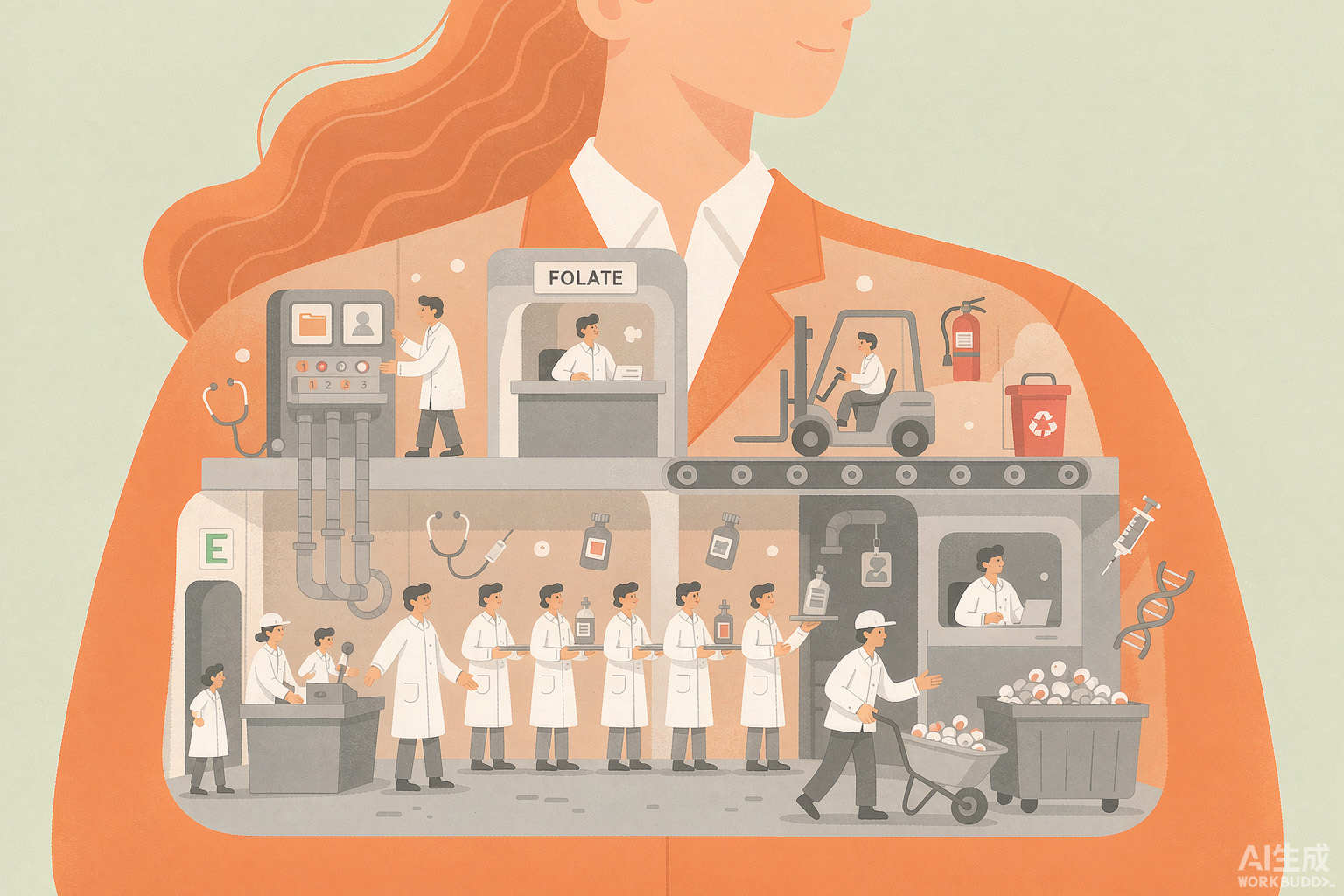
[Visual: An arms-factory analogy—immune cells line up for supplies while the warehouse is nearly empty]
Your immune system is a major construction site—and it runs on one key material
Getting over a cold depends on your immune cells doing their job.
Once a virus enters the body, immune cells need to divide and multiply rapidly, building an army in a very short time.
Think of it like constructing a building. You may have the plans and the workers, but you still need steel.
For cell division, that "steel" is DNA. And one of the most important raw materials for making DNA is folate.
So folate is hardly just "something for pregnant women."
It is more like the steel supply for your immune system's arms factory.
When the supply chain breaks down, reinforcements cannot arrive. The defensive line starts to wobble.
Animal research has explored this connection. In one mouse study, supplementation with directly usable 6S-5-Methyltetrahydrofolate calcium for more than 30 days increased NK-cell activity—from 3.44% to over 14%. NK cells are like the patrol officers constantly circulating through your bloodstream, and their ability to clear foreign substances improved as well.
Of course, animal findings cannot be directly applied to humans. More research is needed to determine what this means in real-world use.
Still, it is an intriguing direction.
Your diet may be fine. The problem could be the delivery route.
Most folate tablets on the market contain synthetic folic acid.
Folic acid itself is inactive. Once you swallow it, it is more like placing an order: your body still has to process it through three steps before it becomes the usable form, 5-Methyltetrahydrofolate.
The bottleneck is the final step—the MTHFR enzyme.
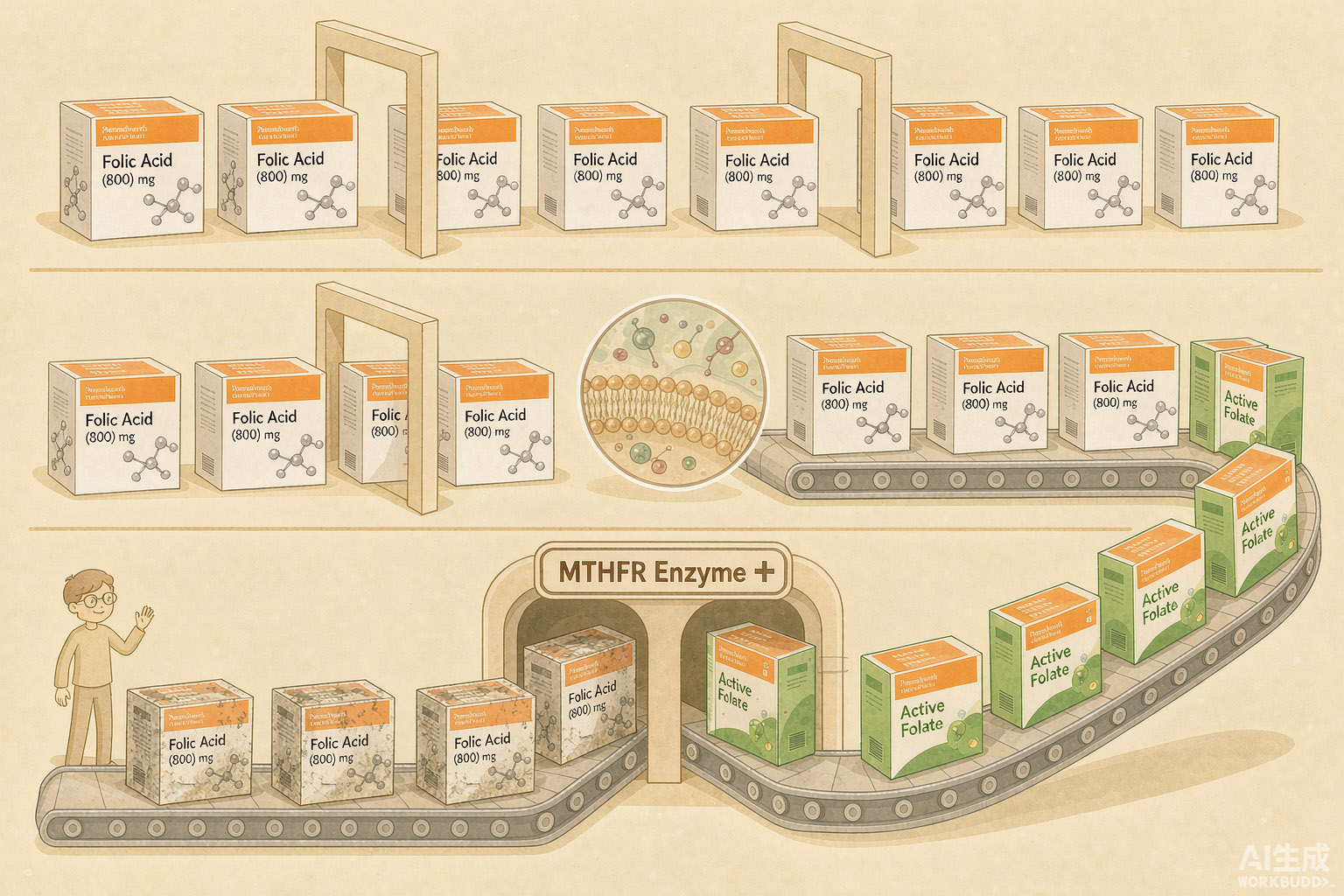
[Visual: Three-step conversion pathway—MTHFR blocks part of the folate supply]
Now those numbers from earlier make more sense. Among Han Chinese individuals, around 55.7% carry a heterozygous variant and approximately 26.4% carry a homozygous variant.
With a heterozygous variant, processing speed is reduced. With a homozygous variant, efficiency may fall to just one-third.
Two people may take the same folic acid tablet. One receives the full delivery; for the other, it gets stuck at the transit hub, with only 30% arriving.
You think you've supplemented enough.
Your body is still waiting for the shipment.
Can you get enough from meals alone? It's harder than it sounds.
What if you skip supplements and rely entirely on food?
You can—but it is not easy.
Folate is particularly vulnerable to cooking and handling. Chop leafy greens and soak them in water, and some is lost. Stir-fry them over high heat, and more is lost. Simmer them for half an hour, and very little may remain.
The recommended daily intake for adults is 240 micrograms. For people who work every day and rely on takeout for most meals, consistently meeting that target through food alone can be a challenge.
The Mid-Autumn Festival holiday could have been a great chance to eat more vegetables.
But think about it: when a table is packed with meat and rich dishes, isn't that plate of leafy greens usually the first thing left behind?
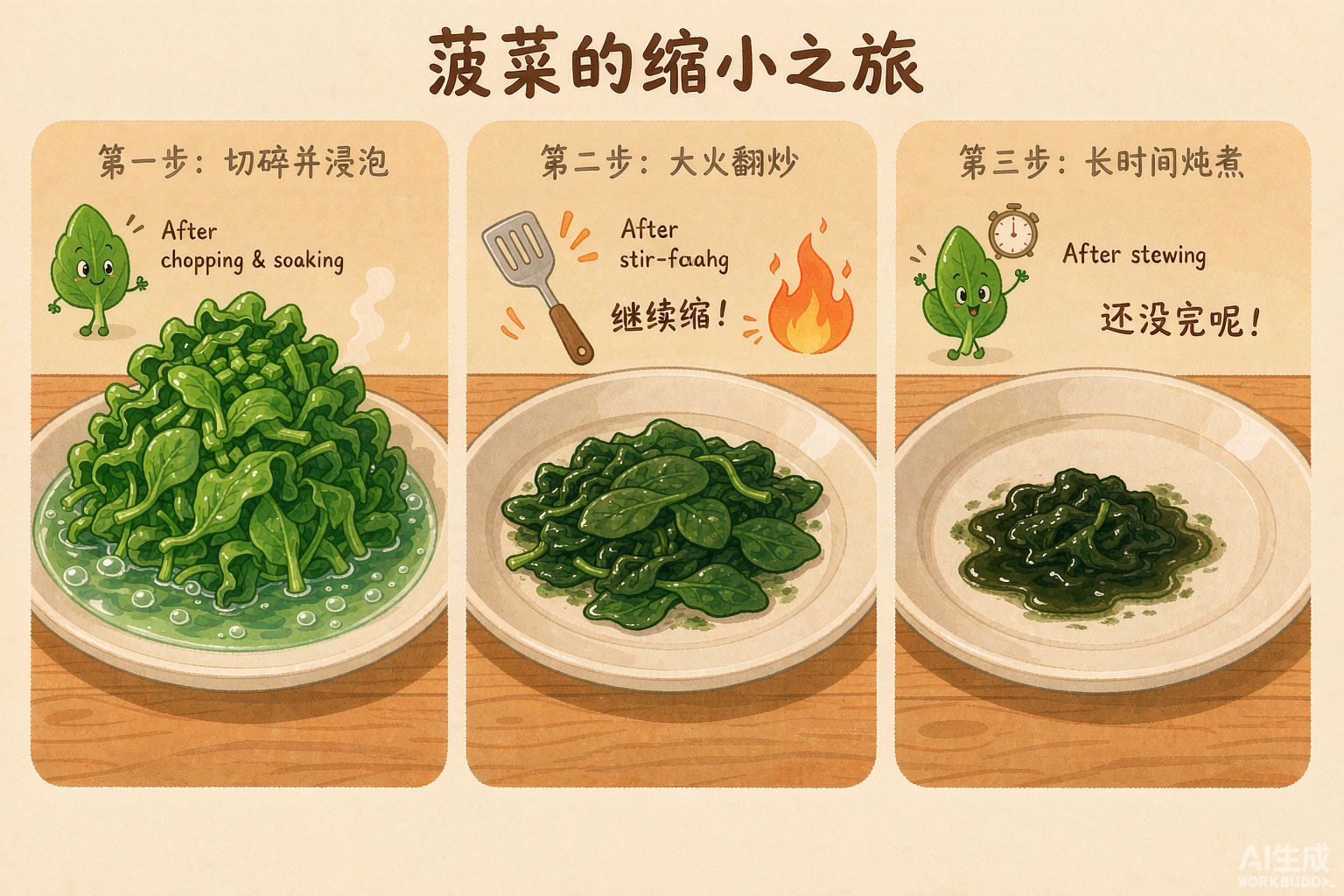
[Visual: Folate-loss illustration—losses from chopping, stir-frying, and stewing]
How to supplement: two different situations
If you are young, eat a balanced diet, and rarely get knocked down when the seasons change, regular folic acid plus leafy greens may be enough. There is no need to spend extra.
But if you catch a cold every seasonal transition, heal more slowly than your colleagues, feel tired despite getting enough sleep, or have older family members who have taken supplements for years without seeing much change, it may be worth trying the form your body can recognize directly: 6S-5-Methyltetrahydrofolate calcium.
It bypasses the conversion process and can be absorbed in the intestine without depending on genotype.
When choosing this type of product, check two things.
First, the configuration: look for 6S. This is the form the body recognizes.
Second, look at stability and purity.
A study published in *Molecules* compared different crystal forms of active folate. Crystal Form C maintained effective plasma levels for nearly four times longer than the comparison form, with more complete absorption and utilization [3].
Few ingredients on the market meet this crystal-form standard. Magnafolate is one of them.
Three small things you can do right after Mid-Autumn Festival
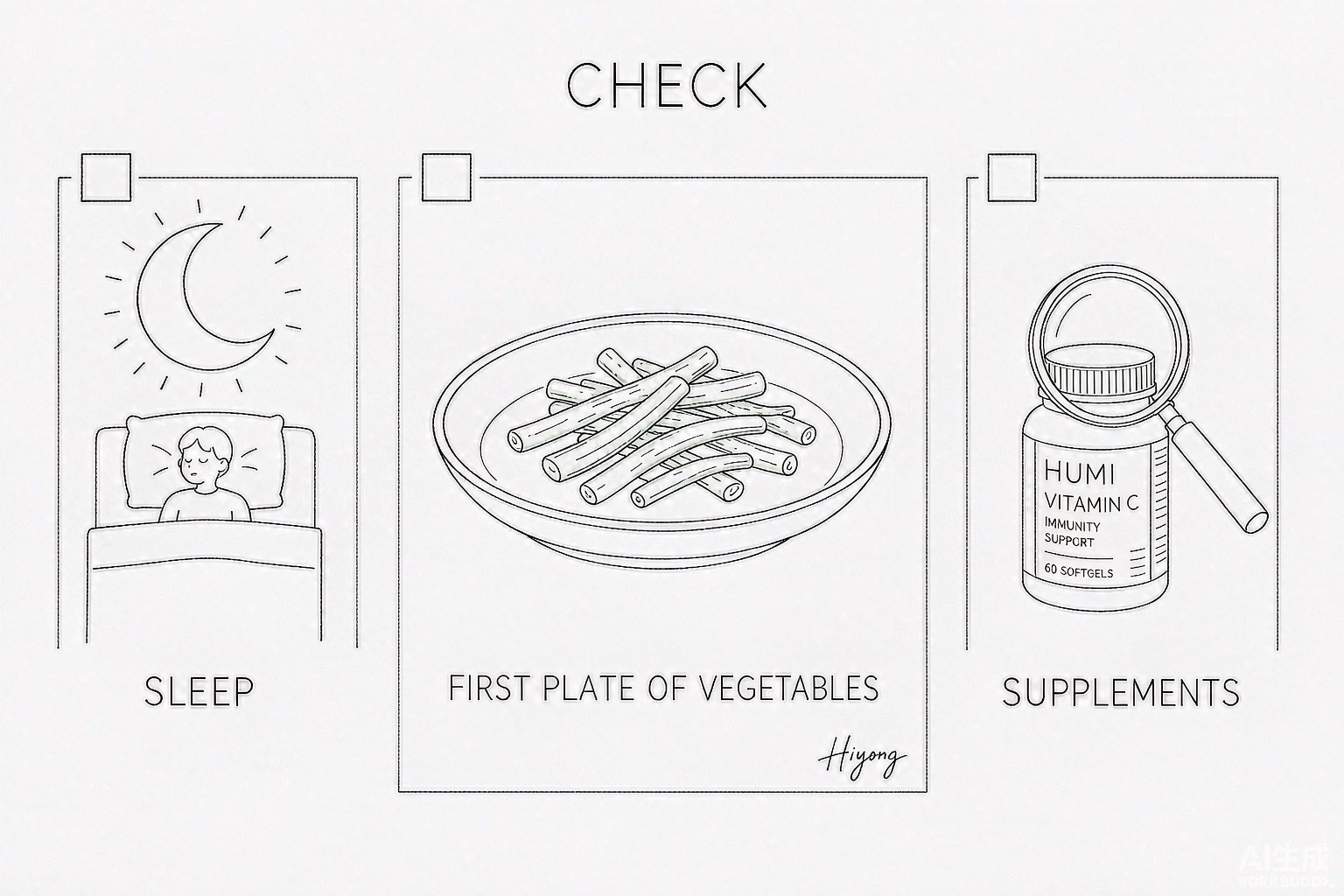
[Visual: Action checklist—sleep well, eat greens, check the ingredient label]
First: Stop staying up late during the holiday. Immune-cell proliferation peaks during deep sleep.
Second: Add a plate of lightly oiled, quickly stir-fried leafy greens to the table. Don't stew them for too long.
Third: Take out that bottle of folate at home and check the ingredient list. Does it say "folic acid," or "6S-5-Methyltetrahydrofolate calcium"?
When choosing supplements for older family members, that line in small print may matter more than the big numbers on the front of the package.
Take a look, then come back and leave a comment: which one is listed on your bottle?
Disclaimer: This article is intended for educational and industry-exchange purposes only. It does not constitute medical advice and is not a substitute for diagnosis or guidance from a licensed physician or clinical nutritionist. Dietary supplements are not medicines and cannot diagnose, treat, or prevent disease. Individuals who are planning pregnancy, pregnant, breastfeeding, living with chronic conditions, or taking long-term medication should follow medical advice or consult a qualified healthcare professional regarding folate supplementation.
References
[1] Xue J, Ma W, Tu H, et al. Study on the immune-enhancing effects of 6S-5-Methyltetrahydrofolate calcium in mice. China Medicine and Pharmacy, 2021, 11(17): 29–33.
[2] Yang B, Liu Y, Li Y, et al. Geographical Distribution of MTHFR C677T, A1298C and MTRR A66G Gene Polymorphisms in China: Findings from 15357 Adults of Han Nationality. PLoS ONE, 2013, 8(3): e57917.
[3] Lian Z, Chen H, Liu K, et al. Improved Stability of a Stable Crystal Form C of 6S-5-Methyltetrahydrofolate Calcium Salt, Method Development and Validation of an LC–MS/MS Method for Rat Pharmacokinetic Comparison. Molecules, 2021, 26(19): 6011.
[4] Lian Z, Liu K, Gu J, et al. Biological characteristics and applications of folic acid and 5-Methyltetrahydrofolate. China Food Additives, 2022(2): 229–238.


 Online Service
