
 English
 Español
 Português
 русский
 Français
 日本語
 Deutsch
 tiếng Việt
 Italiano
 Nederlands
 ภาษาไทย
 Polski
 한국어
 Svenska
 magyar
 Malay
 বাংলা ভাষার
 Dansk
 Suomi
 हिन्दी
 Pilipino
 Türkçe
 Gaeilge
 العربية
 Indonesia
 Norsk
 تمل
 český
 ελληνικά
 український
 Javanese
 فارسی
 தமிழ்
 తెలుగు
 नेपाली
 Burmese
 български
 ລາວ
 Latine
 Қазақша
 Euskal
 Azərbaycan
 Slovenský jazyk
 Македонски
 Lietuvos
 Eesti Keel
 Română
 Slovenski
 मराठी
 Srpski језик


Most folic acid consumed by the human body is not in its biologically active form.
This is not due to manufacturers’ unwillingness to produce active folate. Active folate is highly susceptible to degradation by light, heat and moisture. Its activity continues to decline even after being bottled or compressed into tablets.
Active folate, namely 6S‑5‑methyltetrahydrofolate, is the predominant natural biologically active form of folate in the human body. Scholars recognized this compound as early as the mid‑20th century. Nevertheless, technical bottlenecks in stabilizing active folate long hindered its practical application.
Around 2000, Germany’s Merck developed the first stable crystalline form, known as Form‑I. While the technical path was established, it was protected by patents.
China needed its home‑grown active folate technology.
Based in Lianyungang, Jiangsu Province, Jinkang Hexin avoided the patent‑blocked Form‑I route and embarked on independent research to identify new crystal polymorphs.
The search stretched for nearly two decades.
On October 25, 2026, Jinkang Hexin co‑hosted with Nanchang University the *2026 International Conference on Industry‑University‑Research Cooperation (Jiangxi) — International Symposium on Active Folate and Precision Nutrition & Health* in Nanchang, Jiangxi. Professor Lian Zenglin, Chief Scientist of Jinkang Hexin, delivered a report titled *20‑Year R&D and Industrial Promotion of Naturalization Folate*.
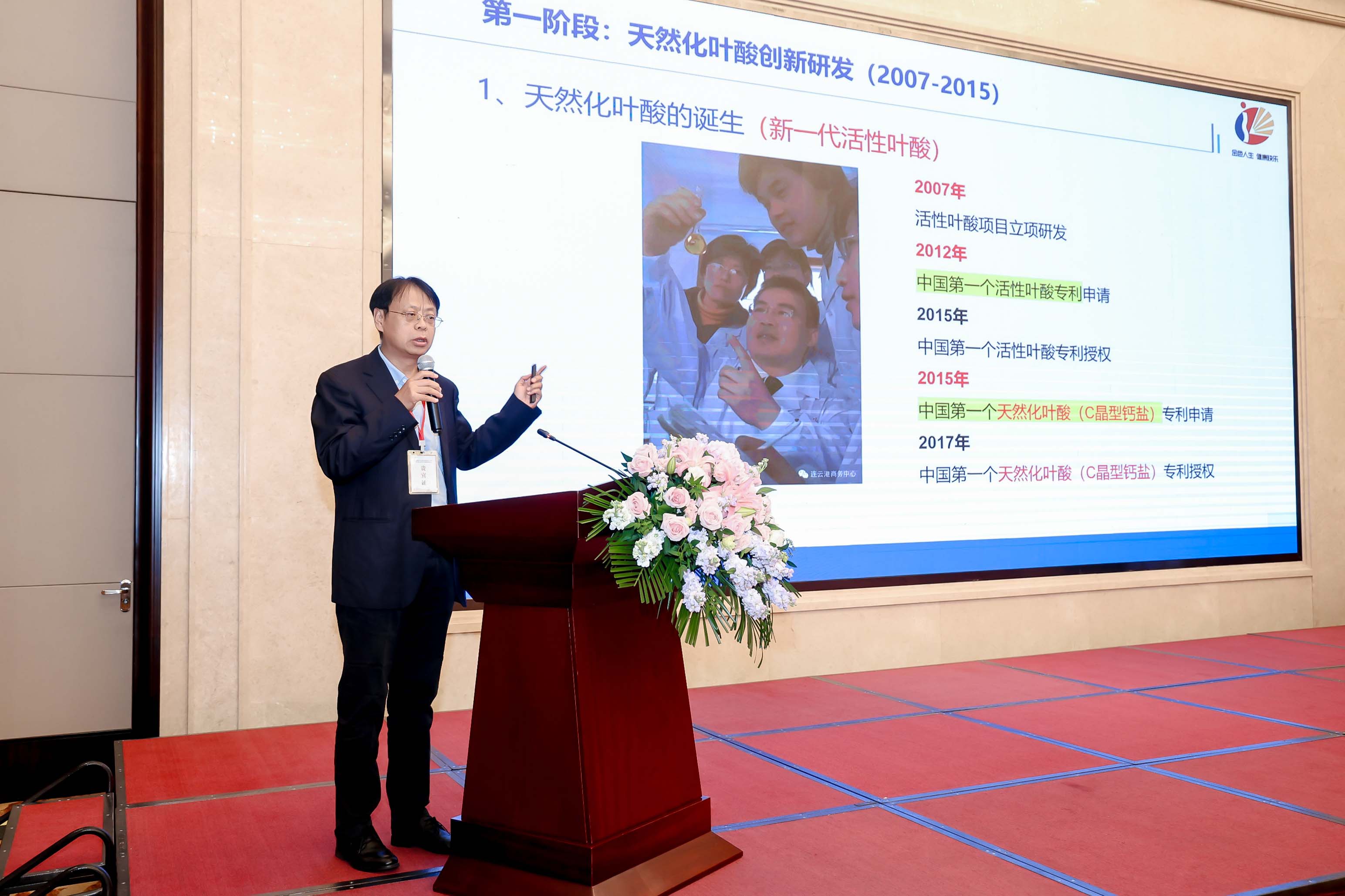
The conference recounted two decades of work: three technical approaches and a globally‑oriented patent portfolio.
Twenty years ago, the journey began with repeated crystallization experiments that were constantly scrapped and restarted on laboratory benches.
Starting from Scratch in 2007
In 2007, Jinkang Hexin launched its R&D program for active folate.
No ready‑made solutions existed. Active folate was chemically unstable; amorphous powder degraded rapidly, and activity was lost even after tableting. Although the international Form‑I process was proven, heavy patent barriers prevented direct adoption.
Laboratory records piled up. Crystal batches failed, purity fell short, and processes had to be rebuilt. Funding grew tight, and the project teetered on the brink of capital‑chain collapse several times.
Yet experiments never stopped amid setbacks.
Crystal Form‑C: Achieved in the Fifth R&D Year
In 2012, a new crystal emerged.
Adopting cross‑disciplinary ultrasonic technology, the research team created Form‑C, a brand‑new stable polymorph of calcium 6S‑5‑methyltetrahydrofolate, named *Magnafolate*. The character “Yuan” stands for the source of biological activity — the very source the team had long sought.
In core patent CN104557937B, the team disclosed two novel polymorphs: Form‑B and Form‑C, among which Form‑C delivers superior stability.
Form‑C is synthesized via an aqueous‑solution method with no high‑temperature melting steps. Raw materials are neutralized for complete dissolution, followed by heating, calcium‑salt addition, and ultrasonic‑assisted crystallization. The process introduces no contaminants and yields uniform, lustrous, high‑purity crystals. Industrial‑scale production was factored into the design from the outset.
Dissolution performance stands out: at 25 °C, Form‑C reaches stable dissolution within 10 seconds, compared with 15 minutes for the mainstream international Form‑I. This nearly two‑order‑of‑magnitude difference favors bodily absorption and utilization.
Stored for six months at 25 °C and 60 % relative humidity, Form‑C shows no visual deterioration and retains 98.96 % of its nominal content.
Purity constitutes another critical benchmark. Announcement No. 13 (2017) from the former National Health and Family Planning Commission of China set the purity specification for calcium 6S‑5‑methyltetrahydrofolate at 99.5 %, a standard proposed by Jinkang Hexin. The company’s internal control threshold is stricter, ranging from 99.8 % to 99.9 %.
Impurity limits are also tightened. For Form‑C, JK12A is controlled below 0.1 %, 5‑methyltetrahydropteroic acid remains undetectable, total impurities do not exceed 0.5 %, and D‑isomer content is capped at 0.1 %. Corresponding limits for mainstream international Form‑I are 1.0 %, 0.5 %, 2.5 % and 1.0 % respectively — roughly one order of magnitude higher.
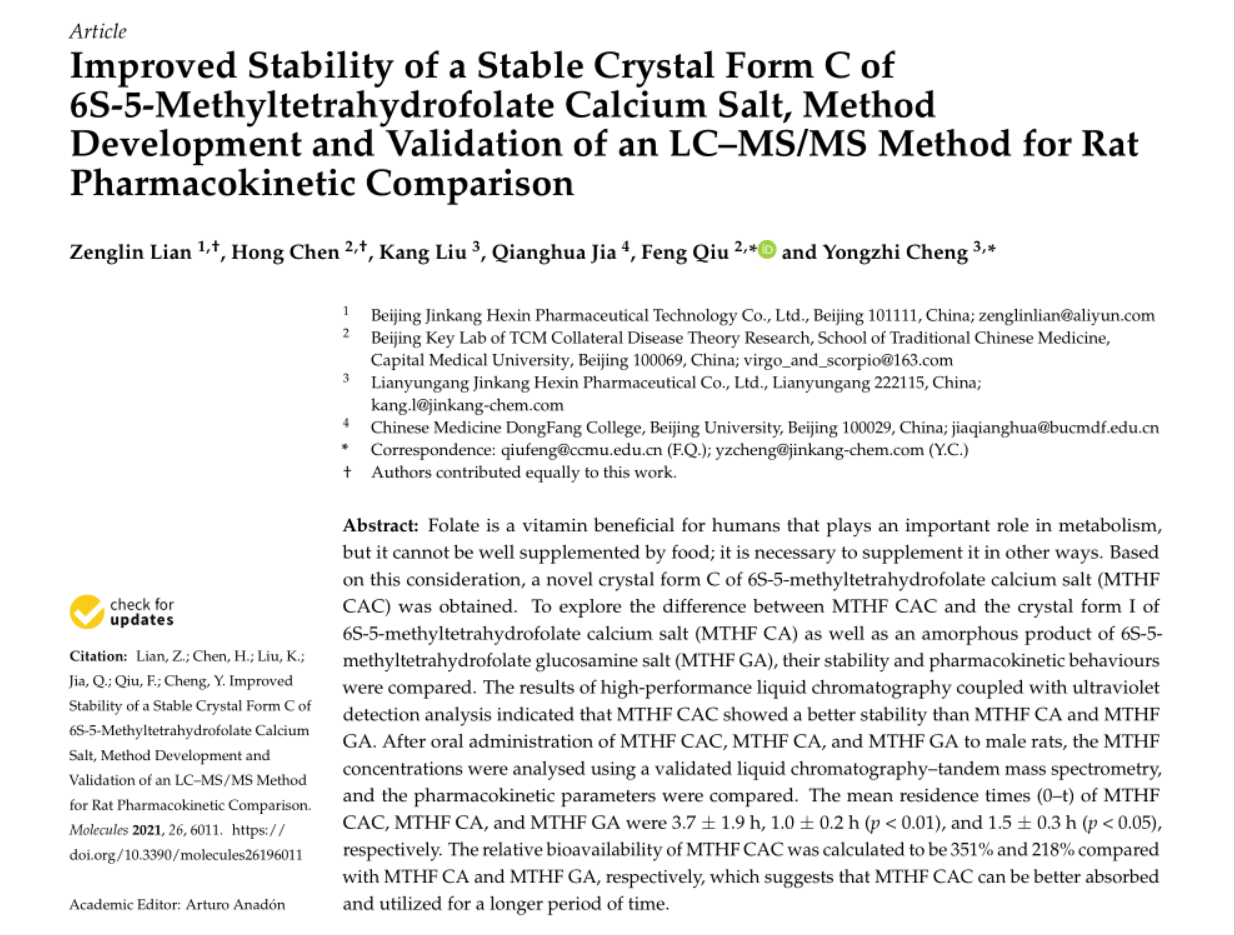
Beyond laboratory testing, Lian’s team published a 2021 paper in *Molecules* comparing Form‑C, Form‑I and amorphous glucosamine salt. Form‑C generates fewer degradation products such as JK12A and exhibits higher bioavailability.
A 20‑Year‑Built Patent Portfolio
Patent development and product regulatory approvals advanced in parallel over these two decades.
Two foundational patents laid the groundwork: the core Form‑C patent CN104557937B (filed 2014, granted 2017), and an earlier Chinese active‑folate patent filed in 2012 and granted in 2015.
Building on these, a three‑tier patent system covering basic patents, standard‑essential patents and application‑oriented patents has taken shape. Over 100 domestic and international patent applications have been filed, with 62 patents granted, covering major markets including China, Europe, the United States, Japan, South Korea and Australia.
On the regulatory front, Jinkang Hexin completed US‑FDA NDI registration in 2016, granting its active‑folate raw material market access to North America. In 2017, the enterprise promoted the release of Announcement No. 13 by the former National Health and Family Planning Commission, officially authorizing calcium 6S‑5‑methyltetrahydrofolate as a permitted folate source.
Regulatory scope kept expanding: approval for use in infant, pregnant and lactating women’s milk‑powder formulas arrived in 2019; further clearances followed for foods for special medical purposes in 2020, and special dietary foods for pregnant and lactating women in 2021. In 2025, it was approved for fortification in wheat flour.
China’s annual wheat‑flour processing output exceeds 80 million metric tons. Even ordinary household noodles can become a vehicle for folate nutritional intervention.
In 2026, active folate gained approval for complementary food nutrition products.
Translating Chemical Stability into Food on the Table
An industrial salon on active folate was held alongside the conference. The enterprise that chased the concept of the “source” 20 years ago now builds collaborative platforms for the whole industry.
Downstream manufacturers spoke first. Jiang Zegen, General Manager of Times Foods for Special Medical Purposes (Shenzhen) Co., Ltd., reported two persistent challenges for functional oral‑liquid producers: active folate degradation during 120 °C high‑temperature sterilization, and activity loss across the 24‑month long shelf‑life.
Wu Xiaodan, Director of Quality at Jinkang Hexin, presented solutions: differentiated process optimization and segmented dosing. Raw materials are added in the low‑temperature late production phase to bypass front‑end high‑temperature sterilization. Encapsulation technology further shields active folate from heat, oxygen and moisture.

At the same salon, Professor Liu Wei from the School of Food Science, Nanchang University, shared joint R&D outcomes with Jinkang Hexin: the resulting active‑folate concentrated liquid maintains ≥99 % folate retention after treatment at 95 °C for 30 minutes.
Professor Zou Liqiang, also from Nanchang University, incorporated active folate into liposomal microcapsules, achieving a 10 % loading capacity, ≥80 % retention during gastrointestinal digestion, and ≥90 % dissolution rate.
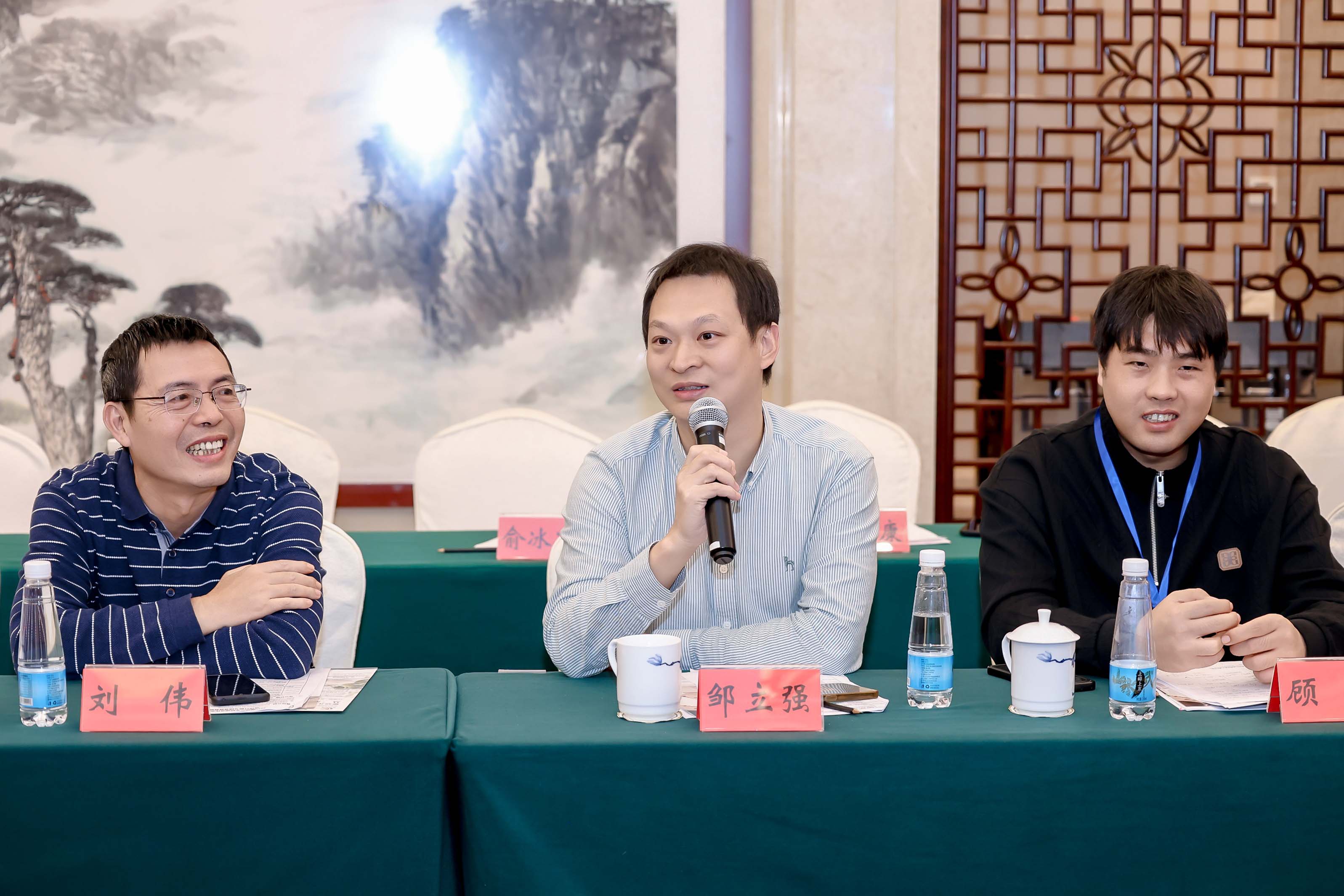
Translating laboratory achievements into real‑world products, Professor Lian Zenglin stated that Jinkang Hexin is prioritizing three industrial tracks: complementary‑food nutrition products, staple‑food fortified wheat flour, and modified milk powders, to accelerate industrial implementation.
Whether supplemented folate can be biologically utilized ultimately depends on how much active substance remains intact. Jinkang Hexin has walked this path for 20 years.
References
[1] LIAN Z, CHEN H, LIU K, et al. Improved stability of a stable crystal form C of 6S‑5‑methyltetrahydrofolate calcium salt, method development and validation of an LC–MS/MS method for rat pharmacokinetic comparison[J]. *Molecules*, 2021, 26(19): 6011‑6026.
[2] WANG Y, LIAN Z, GU R, et al. Oxidation product of 5‑methyltetrahydrofolate: structure, synthesis & biological safety[J]. *Journal of Molecular Structure*, 2024, 1316: 138909.
[3] Lian Zenglin, Liu Kang, Gu Jinhua, et al. Biological characteristics and applications of folic acid and 5‑methyltetrahydrofolate[J]. *China Food Additives*, 2022(2).
[4] Lianyungang Jinkang Hexin Pharmaceutical Co., Ltd. Stable calcium salt polymorphs of 5‑methyltetrahydrofolate and preparation method thereof: China, CN104557937B[P]. 2017‑03‑08.
News Links
[1] China Food News. Leveraging Active Folate to Build International Industry‑University‑Research Platform[EB/OL]. (2026‑10‑26). [https://www.cnfood.cn/article?id=2114528856190849026](https://www.cnfood.cn/article?id=2114528856190849026)
[2] China Food News. Focusing on Precision Nutrition, Expanding Application Scenarios: Exploring High‑Quality Industrialization Pathways for Active Folate[EB/OL]. (2026‑10‑27). [https://www.cnfood.cn/article?id=2114898132621955074](https://www.cnfood.cn/article?id=2114898132621955074)
[3] China Food News. Building Industry‑University‑Research Platforms to Bridge Hidden Nutritional Gaps[EB/OL]. (2026‑10‑28). [https://www.cnfood.cn/article?id=2115046809713872897](https://www.cnfood.cn/article?id=2115046809713872897)
[4] China Food News. Focusing on Precision Nutrition and Application Scenarios: Experts and Enterprises Discuss Active Folate Industrialization[EB/OL]. (2026‑10‑29). [https://www.cnfood.cn/article?id=2115603512587030529](https://www.cnfood.cn/article?id=2115603512587030529)
Disclaimer
This document serves popular‑science and industry‑exchange purposes only and does not constitute medical or nutritional advice. Dietary supplements cannot diagnose, treat or prevent diseases. Individuals who are attempting conception, pregnant, lactating, living with chronic conditions or taking medications shall consult physicians or qualified nutrition professionals for folate‑supplementation regimens.


 Online Service

