
 Español
 Português
  русский
  Français
  日本語
日本語  Deutsch
  tiếng Việt
  Italiano
  Nederlands
  ภาษาไทย
  Polski
  한국어
한국어  Svenska
  magyar
  Malay
Malay  বাংলা ভাষার
  Dansk
Dansk  Suomi
Suomi  हिन्दी
  Pilipino
  Türkçe
  Gaeilge
  العربية
  Indonesia
  Norsk
Norsk  تمل
تمل  český
český  ελληνικά
  український
  Javanese
  فارسی
فارسی  தமிழ்
தமிழ்  తెలుగు
  नेपाली
  Burmese
  български
  ລາວ
ລາວ  Latine
  Қазақша
  Euskal
  Azərbaycan
  Slovenský jazyk
  Македонски
  Lietuvos
  Eesti Keel
  Română
  Slovenski
  मराठी
मराठी  Srpski језик


The first time you feel that gentle, almost magical flutter in your belly, joy can overflow from deep within. Yet beneath the happiness often lies a tender worry—Is my baby safe in this little world of theirs? Are they slowly gathering strength so that, on the day we meet, they can greet us with a healthy weight and a smile?

Birth weight is far more than a number on the delivery room chart. It is the baby’s first silent letter to the world, quietly recording their growth story in the womb and subtly shaping their health journey ahead.
Many expectant mothers today take folate during pregnancy, but still wonder: apart from helping prevent neural tube defects, can this small vitamin truly help their baby be born stronger? And if combined with vitamin B12, would it be even more effective?
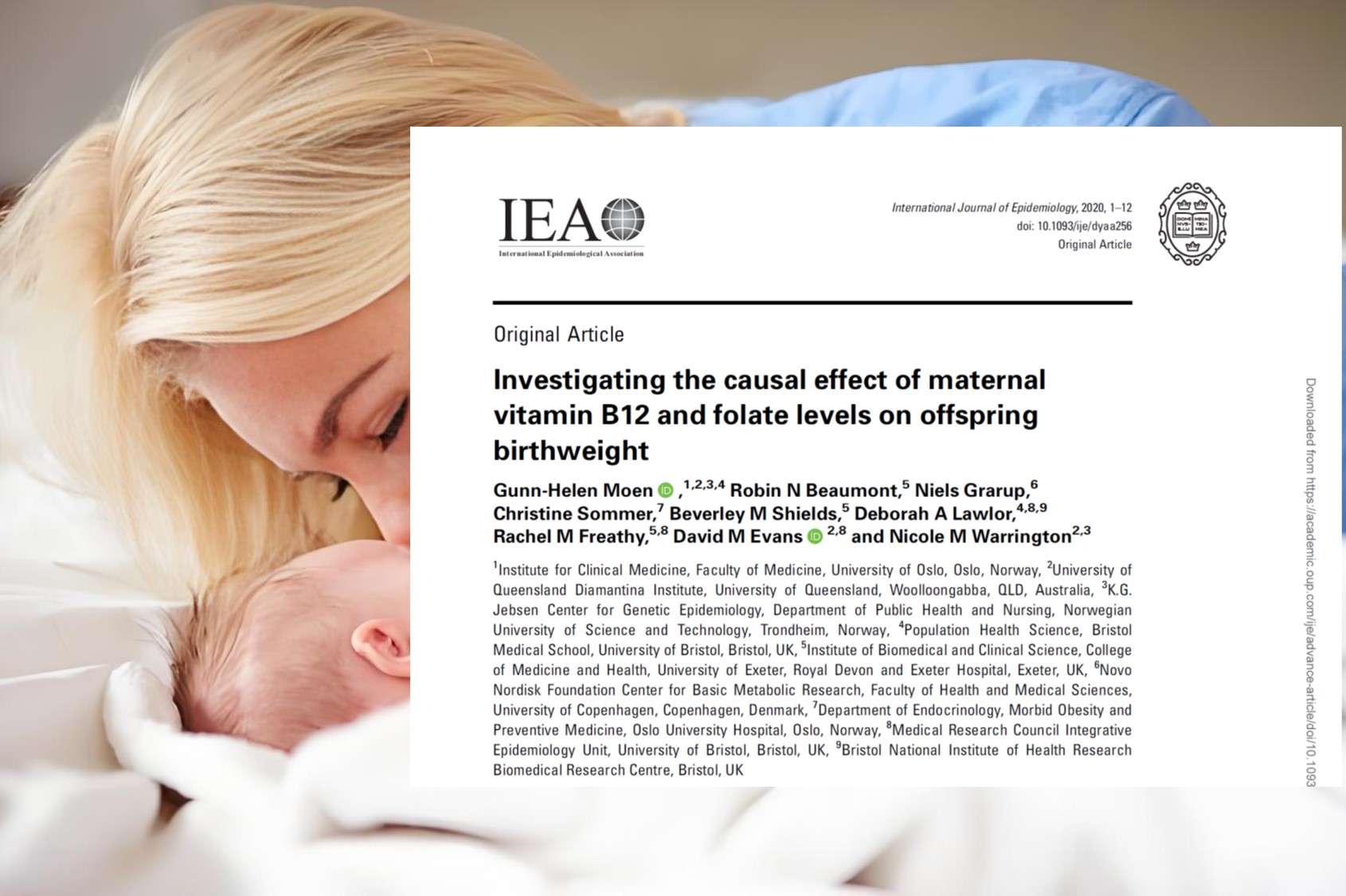
Scientists share the same curiosity and have been searching for answers. In 2020, the International Journal of Epidemiology published a large-scale study that moved beyond conventional approaches. Researchers used a method called Mendelian randomization, treating naturally occurring genetic differences as a kind of built-in experiment, thereby reducing confounding factors such as diet and lifestyle. They examined whether maternal folate and B12 levels genuinely influence offspring birth weight. The analysis drew on genetic data related to birth weight from over 500,000 individuals, plus vitamin level measurements from more than 45,000 people, providing robust support for the findings.
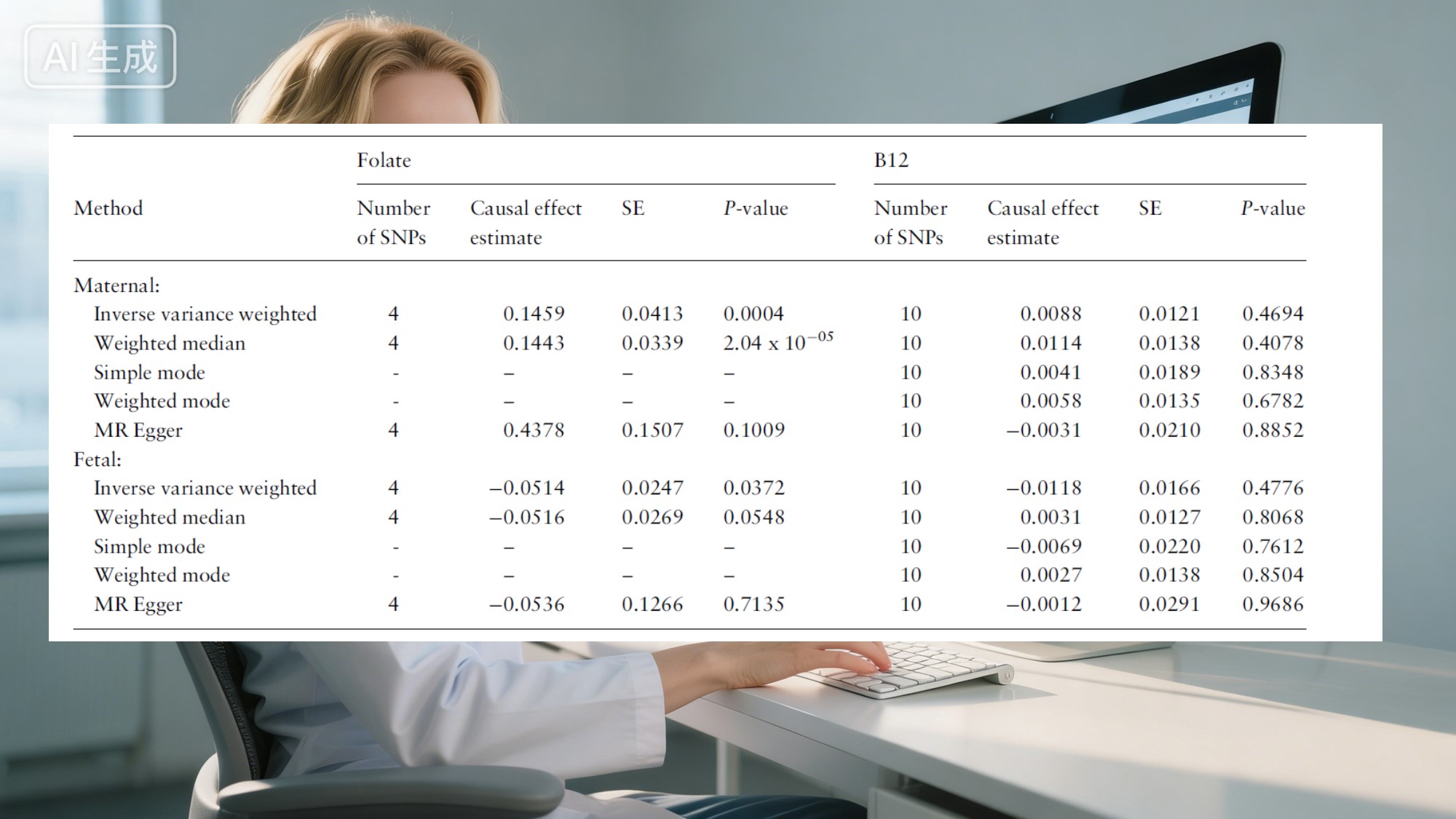
The results held some surprises and clarified earlier uncertainties.
For vitamin B12, the study found no direct link to birth weight. In other words, past observations that “low B12 seems linked to lower birth weight” are likely influenced by other factors—not a direct effect of B12 itself. Of course, B12 deficiency during pregnancy remains a concern for preventing anemia; it just doesn’t play a major role in boosting birth weight.

For folate, the evidence was clear: higher maternal folate levels do help babies gain more weight. On average, each one-standard-deviation increase in folate corresponded to an extra ~71 grams of birth weight. This trend remained consistent across different analytical methods, aligning with earlier clinical observations and now reinforced by genetic-level data. Folate, it turns out, is a tangible contributor to giving newborns a stronger start in life.
Some nuanced findings emerged: fetal folate metabolism also slightly affects weight; folate and B12 do not compete in influencing birth weight; importantly, the effect is not simply due to prolonging gestation, ruling out the idea that babies merely stay longer in the womb to gain weight.

Knowing folate positively impacts birth weight raises a practical question: with so many folate products on the market, how do we choose one that is both effective and safe?
Here lies a key yet often overlooked fact: folate comes in different forms, and form determines how well the body absorbs and uses it. When people say “take folate,” they usually mean folic acid—a synthetic version. Once ingested, folic acid cannot act directly; it must undergo a series of enzyme-driven conversions in the liver, first into dihydrofolate, then tetrahydrofolate, and finally into the biologically active 5-Methyltetrahydropteroic acid (5-MTHF) before cells can use it.

The catch is that roughly 30–70% of people have reduced activity of the key converting enzymes due to genetic variations such as MTHFR mutations. Their ability to convert folic acid is limited, and when daily intake exceeds 200 μg, there is a risk of accumulating Unmetabolized Folic Acid in the bloodstream.
This is where Naturalization folate—specifically Magnafolate, a natural-form folate—comes in. As the active 5-MTHF, Magnafolate bypasses complex liver conversion steps and is absorbed directly in the small intestine.

Science tells us not only to supplement folate, but also how to supplement it wisely. Active folate offers higher bioavailability and a more straightforward absorption pathway, making it a better fit—especially Magnafolate, which has demonstrated safety at effectively non-toxic levels, ensuring every dose truly benefits the mother and baby.
Note: Always follow medical advice when supplementing folate during pregnancy.
Reference:
[1] Moen G-H, Beaumont RN, Grarup N, et al. Investigating the causal effect of
maternal vitamin B12 and folate levels on offspring birthweight. International
Journal of Epidemiology, 2020. doi:10.1093/ije/dyaa256
[2] Lian Zenglin, Liu Kang, Gu Jinhua, Cheng
Yongzhi. Biological characteristics and applications of folate and
5-Methyltetrahydropteroic acid. *China Food Additives*, 2022(2): 229–238.


 Online Service
