
 Español
 Português
  русский
  Français
  日本語
日本語  Deutsch
  tiếng Việt
  Italiano
  Nederlands
  ภาษาไทย
  Polski
  한국어
한국어  Svenska
  magyar
  Malay
Malay  বাংলা ভাষার
  Dansk
Dansk  Suomi
Suomi  हिन्दी
  Pilipino
  Türkçe
  Gaeilge
  العربية
  Indonesia
  Norsk
Norsk  تمل
تمل  český
český  ελληνικά
  український
  Javanese
  فارسی
فارسی  தமிழ்
தமிழ்  తెలుగు
  नेपाली
  Burmese
  български
  ລາວ
ລາວ  Latine
  Қазақша
  Euskal
  Azərbaycan
  Slovenský jazyk
  Македонски
  Lietuvos
  Eesti Keel
  Română
  Slovenski
  मराठी
मराठी  Srpski језик


News of sudden cardiac death has been flooding social media lately, sending a chill through countless middle-aged people aged 40 to 65. At this stage of life, they support aging parents and raise underage children, making them the undisputed backbone of their families. Yet coronary heart disease and acute cardiovascular emergencies often strike without warning.
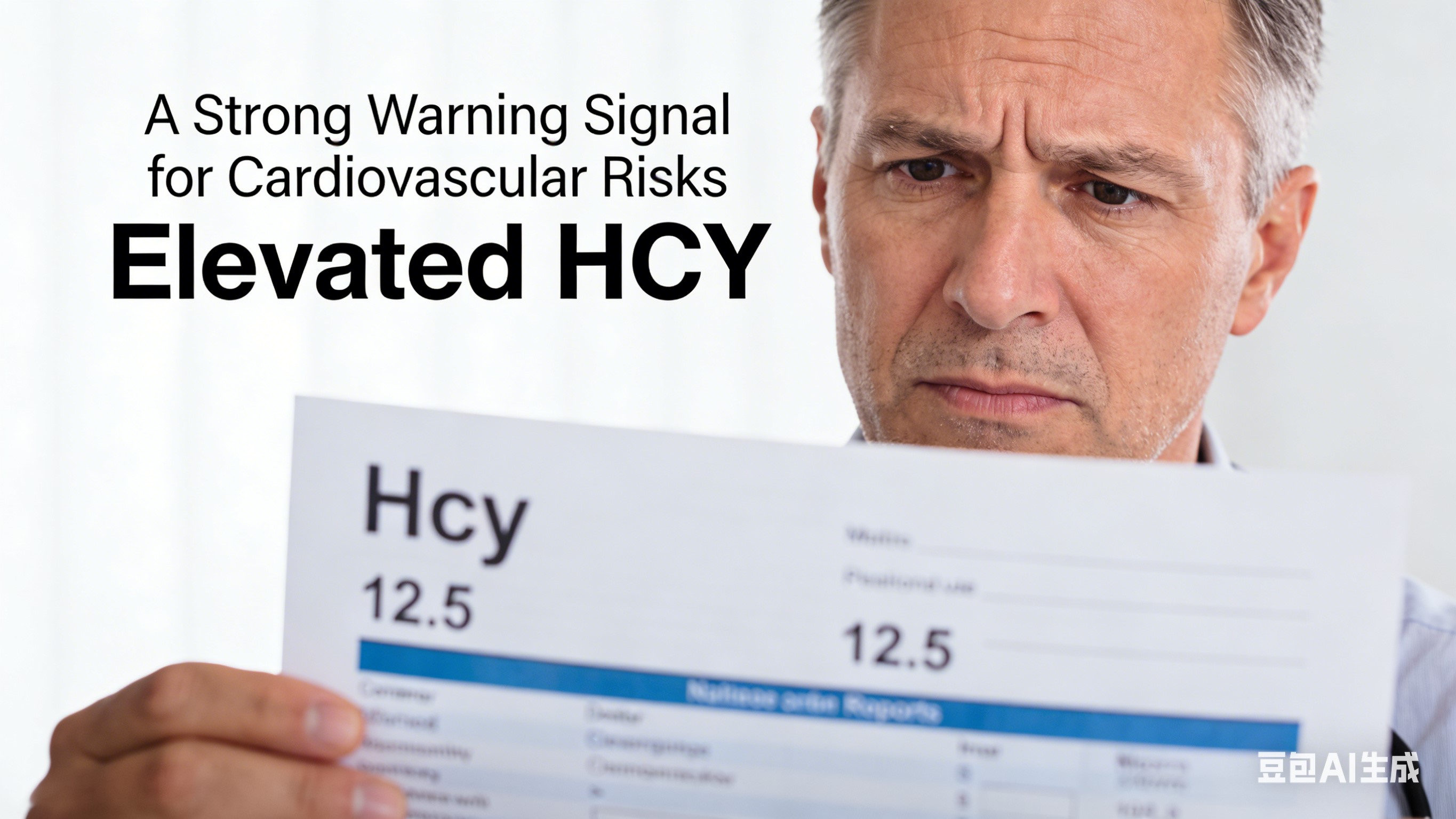
In daily health management, people fixate closely on the “three highs”: hypertension, hyperlipidemia, and hyperglycemia. But nearly everyone overlooks a key cardiovascular risk indicator widely recognized in international medical science — homocysteine, abbreviated as HCY.
It acts like a “hidden assassin” lurking in blood vessels: there are no uncomfortable symptoms at ordinary times, but once the level exceeds the normal range, it quietly plants fatal risks in the cardiovascular system. And the core nutrient that can keep this “assassin” in check is the well-known folate.
I. Elevated HCY: A Strong Warning Signal for Cardiovascular Risks
Many people feel unfamiliar and professional when hearing about HCY for the first time. Even when seeing it on their physical examination reports, they only regard it as an insignificant minor indicator.
However, it is an intermediate product naturally produced during human protein metabolism. Its concentration in the blood directly reflects your vascular health and metabolic status.
Numerous authoritative clinical studies have reached conclusive findings:
1. Serum HCY levels in patients with coronary heart disease are significantly higher than those in healthy people. It is also accompanied by elevated total cholesterol, triglycerides, bad cholesterol (low-density lipoprotein) and reduced good cholesterol (high-density lipoprotein), comprehensively increasing cardiovascular risks;
2. HCY is an independent risk factor for coronary heart disease, equivalent to well-known risk factors such as hypertension, hyperlipidemia and diabetes. The higher the value, the greater the risk of developing coronary heart disease;
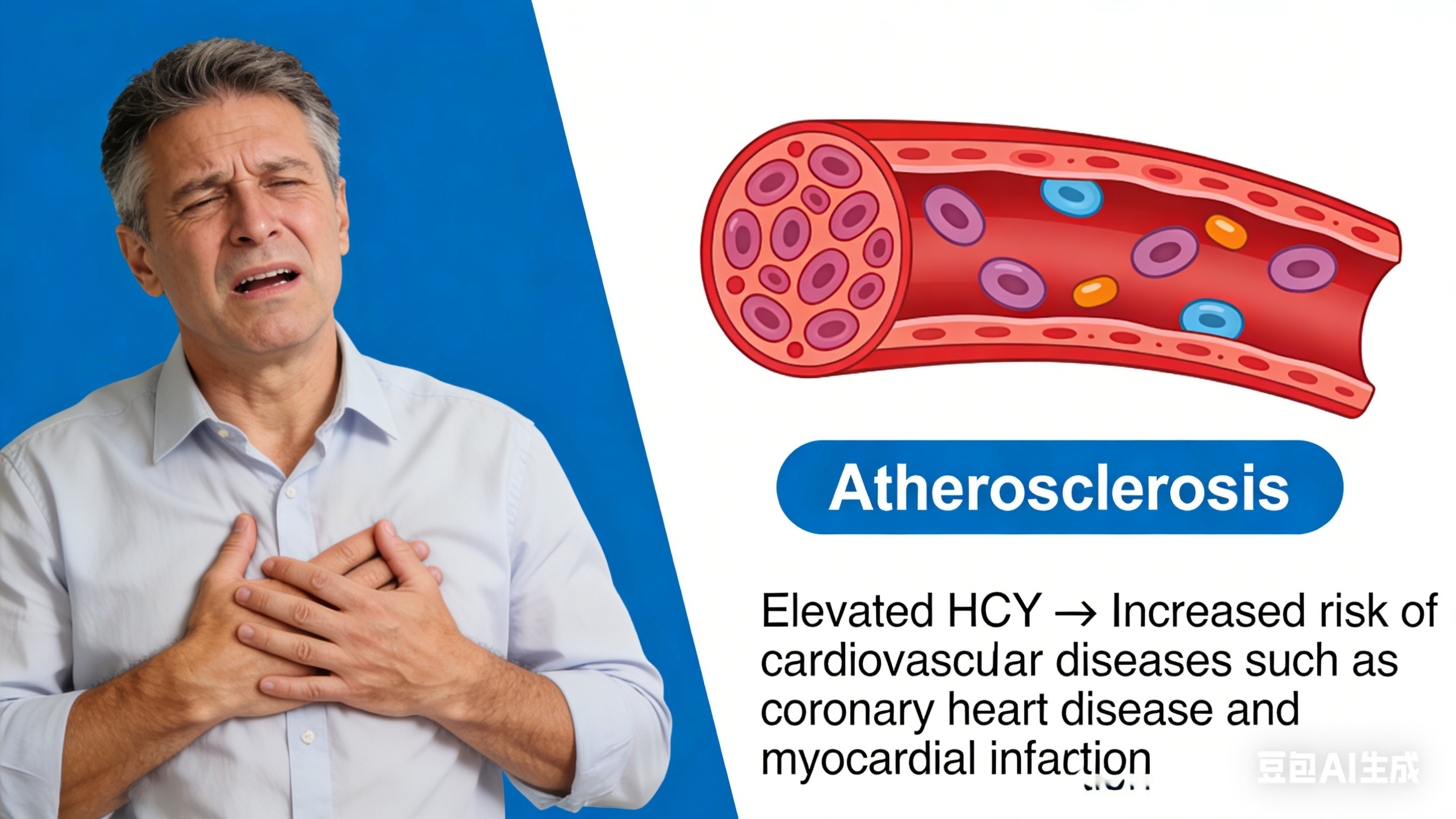
3. High HCY not only damages vascular endothelium and accelerates atherosclerosis, but also destroys key connexins in myocardial electrical conduction, induces malignant arrhythmia, and significantly increases the probability of sudden cardiac death.
Let’s be honest—the higher your HCY level, the more easily plaque will form in your blood vessels and cause narrowing. Subsequently, the risks of myocardial ischemia, acute myocardial infarction, and sudden cardiac death will rise sharply as well. Yet this indicator is often overlooked in routine physical examinations year after year, making it the biggest blind spot in cardiovascular protection for middle-aged people.
II. Folate: Nature’s Antidote to HCY
Folate is an essential B vitamin for the human body, and the key substance that helps metabolize HCY.
HCY in the body can only be converted into harmless substances and smoothly excreted under the synergistic action of folate and vitamin B12. If folate intake is insufficient, HCY cannot be metabolized normally and will accumulate increasingly in the body. Like unremovable metabolic waste in blood vessels, it gradually clogs vessels, damages the endothelium, and sows hidden dangers for cardiovascular health.
Sufficient and absorbable folate intake is the first nutritional defense line to lower HCY and protect the cardiovascular system.
Many people may think: Can’t I just eat more folate-rich foods such as spinach, broccoli, animal liver, and legumes?
The reality is that modern diets are overly refined, compounded by frequent late nights, high stress, and frequent social drinking. Relying solely on daily meals can hardly meet the body’s folate needs — which is why elevated HCY is especially common among middle-aged people.
III. The Special Physical Condition of Chinese People: 78.4% Cannot Effectively Absorb Folic Acid
Here is a little-known national health truth: approximately 78.4% of the Han population in China has MTHFR gene polymorphism. This gene acts as the "master switch" that determines whether your body can properly utilize folic acid. People with this genetic variation cannot efficiently convert common folic acid into its active, directly usable form in the liver.
As a result, many people take folic acid tablets daily and eat plenty of green leafy vegetables, yet their HCY levels stubbornly refuse to drop. The problem is not insufficient intake — their bodies simply cannot utilize the folic acid.
This means that when it comes to cardiovascular protection and HCY reduction, Chinese people cannot simply copy foreign supplementation methods. We must choose folate that can be directly absorbed and precisely metabolized, in line with our own genetic characteristics, to achieve real effectiveness.
Due to the widespread problem of "poor absorption and utilization" of ordinary folic acid, the scientific research and industry sectors have long developed folate forms more suitable for the physical condition of Chinese people — such as Magnafolate®, namely 6S-5-methyltetrahydrofolate calcium, a naturalization folate raw material specially designed for this metabolic trait. Its greatest advantage is that it requires no secondary metabolic conversion in the liver and can be directly absorbed and utilized by the human body. It perfectly meets the supplementation needs of people with MTHFR gene polymorphism, fundamentally solving the problem of "poor absorption and utilization" of ordinary folic acid, and providing more efficient and China-adapted nutritional support for the normal metabolism of HCY.
IV. For Middle-Aged Cardiovascular Care, Do These 3 Things Well
1. A Must-Add Test in Physical Exams: Serum Homocysteine Assay
Stop focusing only on the three highs. After the age of 40, be sure to proactively add serum homocysteine (HCY) to your annual routine checkup.
When it comes to cardiovascular risk, early detection and early intervention are always far more practical and effective than emergency treatment after problems arise.
2. Don’t Supplement Folic Acid Blindly: Only Absorbable Types Work
Taking folate does not mean just following the crowd with ordinary folic acid tablets. You must choose a supplementation method that matches your MTHFR gene status.
Stop blindly taking ordinary folic acid. Prioritize active folate that can be directly absorbed and utilized by the body, so that the supplemented folate can truly function and efficiently lower HCY.
3. Stick to Basic Lifestyle Rules: Don’t Add Extra Burden to Blood Vessels
Quit smoking and limit alcohol intake, avoid staying up late, and reduce prolonged sitting. Keep blood pressure, blood sugar, and blood lipids within a healthy range. Also avoid sudden high-intensity, strenuous exercise after long periods of inactivity.
These seemingly small habits can minimize vascular damage. Combined with scientific folate supplementation, they can fully build a strong defense for the cardiovascular system.
In middle age, your health is never just your own business — it is the foundation and support of your entire family.
Cardiovascular protection does not start only when illness strikes. It lies in the daily habits of understanding every health indicator and supplementing the right key nutrients.
Do not ignore HCY, the hidden risk on your physical exam report. Scientific folate supplementation and proper metabolic management are the most responsible protection for yourself and your family.
References:
[1] LIU W J, WANG T, SUN P F, et al. Expression of Hcy and blood lipid levels in serum of CHD patients and analysis of risk factors for CHD[J]. Experimental and Therapeutic Medicine, 2019, 17: 1756-1760. DOI:10.3892/etm.2018.7111.
[2] ROSENBERGER D, MOSHAL K S, KARTHA G K, et al. Arrhythmia and neuronal/endothelial myocyte uncoupling in hyperhomocysteinemia[J]. Archives of Physiology and Biochemistry, 2006, 112(4/5): 219-227. DOI:10.1080/13813450601093443.
[3] MALDONADO C, SONI C V, TODNEM N D, et al. Hyperhomocysteinemia and sudden cardiac death: potential arrhythmogenic mechanisms[J]. Current Vascular Pharmacology, 2010, 8(1): 64-74.
[4] Jin Zhe, Zhen Sujing, Chen Xing. NBD Reporters Interview Medical Experts: Why Does Sudden Cardiac Death Often Occur in "Seemingly Healthy People"? [N]. National Business Daily, 2026-03-26(004).
[5] Fei Kaihong, Lu Lei. Coronary Heart Disease: The Leading Cause of Sudden Cardiac Death [J]. Prevention and Treatment of Cardio-Cerebral-Vascular Disease, (no issue): 22-23.
[6] Lian Zenglin, Liu Kang, Jinhua Gu, Yongzhi Cheng. Biological Characteristics and Applications of Folic Acid and 5-Methyltetrahydrofolate [J]. China Food Additives, 2022 (2).
[7] Yang B, Liu Y, Li Y, et al. Geographical Distribution of MTHFR C677T, A1298C and MTRR A66G Gene Polymorphisms in China: Findings from 15357 Adults of Han Nationality[J]. PLoS ONE, 2013, 8(3): e57917. doi:10.1371/journal.pone.0057917.


 Online Service
