
 Español
 Português
  русский
  Français
  日本語
日本語  Deutsch
  tiếng Việt
  Italiano
  Nederlands
  ภาษาไทย
  Polski
  한국어
한국어  Svenska
  magyar
  Malay
Malay  বাংলা ভাষার
  Dansk
Dansk  Suomi
Suomi  हिन्दी
  Pilipino
  Türkçe
  Gaeilge
  العربية
  Indonesia
  Norsk
Norsk  تمل
تمل  český
český  ελληνικά
  український
  Javanese
  فارسی
فارسی  தமிழ்
தமிழ்  తెలుగు
  नेपाली
  Burmese
  български
  ລາວ
ລາວ  Latine
  Қазақша
  Euskal
  Azərbaycan
  Slovenský jazyk
  Македонски
  Lietuvos
  Eesti Keel
  Română
  Slovenski
  मराठी
मराठी  Srpski језик


In the previous issue, we discussed why folate-fortified flour is particularly suitable for Chinese households, and we received many comments afterward. Interestingly, the comments clearly fell into two distinct groups.
One group consists of sincere messages from ordinary users. One reader said: “The elderly in my family have a poor memory and often forget to take their blood pressure medication every day, but they never forget to eat. If folate is already added to the flour, we as children will be spared so much worry.” Another woman trying to conceive complained: “I have to take folate tablets when trying to get pregnant, and keep taking them after conception. Swallowing pills makes me feel nauseous. I just thought—couldn’t we leave this to steamed buns?”
The other group consists of friends from the flour industry, who asked very straightforward questions: “We are a small local factory and want to develop some high-end products. How big is the market potential for this folate-fortified flour?” Some also said: “Ordinary flour is now priced so low that there’s barely any profit margin. Can this product really help us break out of the price war?”
Alright, in this issue, let’s put aside empty concepts and have a practical discussion on two questions: Where exactly can this product be used? What can it bring to flour manufacturers?
Don’t underestimate a handful of flour—it can benefit five groups of people.
Many people’s first reaction is: Folate-fortified flour? Isn’t it just for pregnant women?
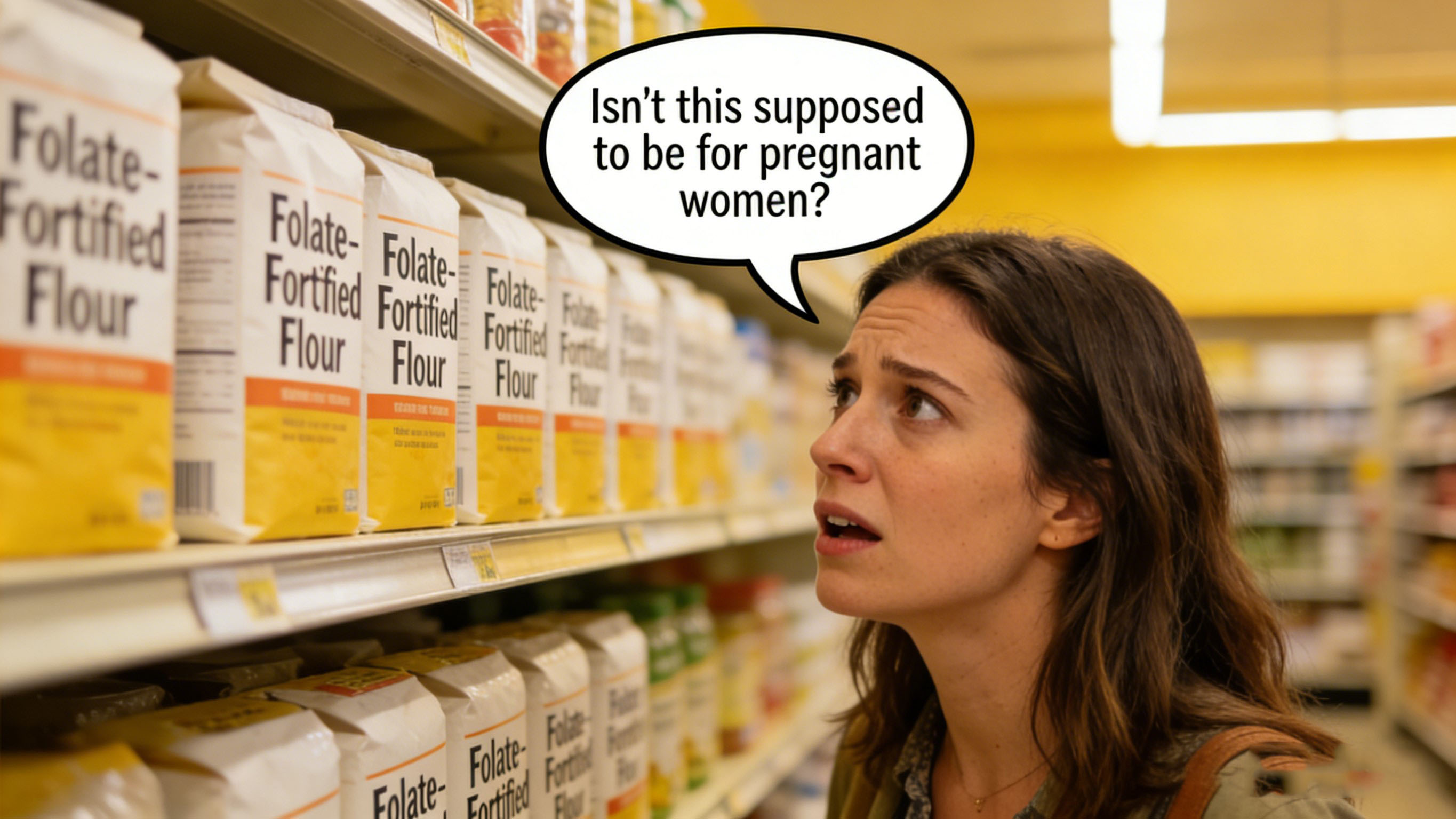
That’s not the case. Each of the following five scenarios represents a potential market of tens of millions.
I. Maternal and Infant Group: From preconception to breastfeeding, turn "forgetting to take pills" into "eating normally".
Every year, tens of millions of women in China prepare for pregnancy, yet the percentage who take folate tablets on time remains low. It is not that they are unwilling, but that they simply cannot remember. Coupled with nausea and vomiting in early pregnancy, swallowing pills can be sheer torture.
Folate-fortified flour uses an active folate called Magnafolate®, which can be directly absorbed without metabolic conversion in the body. An expectant mother simply eats two steamed buns in the morning and a bowl of noodles at noon, and her folate intake is quietly supplemented. There is no difficulty swallowing, no need to set reminders, and no medicinal sensation at all.
According to data from the ‘2024 Maternal & Infant Health Conference’, China's maternal and infant market reached a scale of 3.84 trillion yuan in 2023, with nutritional supplements during pregnancy showing particularly rapid growth. And the simple idea that “eating flour is more reassuring than taking pills” is precisely what makes folate-fortified flour most appealing to consumers.

II. The Elderly Generation: Protect cardiovascular and cerebrovascular health, while solving the long-standing problem of "forgetting to take medicine".
China's population aged 60 and above has exceeded 280 million. Among this group, a large number have elevated homocysteine levels—a major risk factor for stroke and cognitive impairment. Many elderly people take antihypertensives, hypoglycemics, and some even anticoagulants every day. Adding one more folate tablet to the pile often results in them either forgetting to take it or refusing to take it.
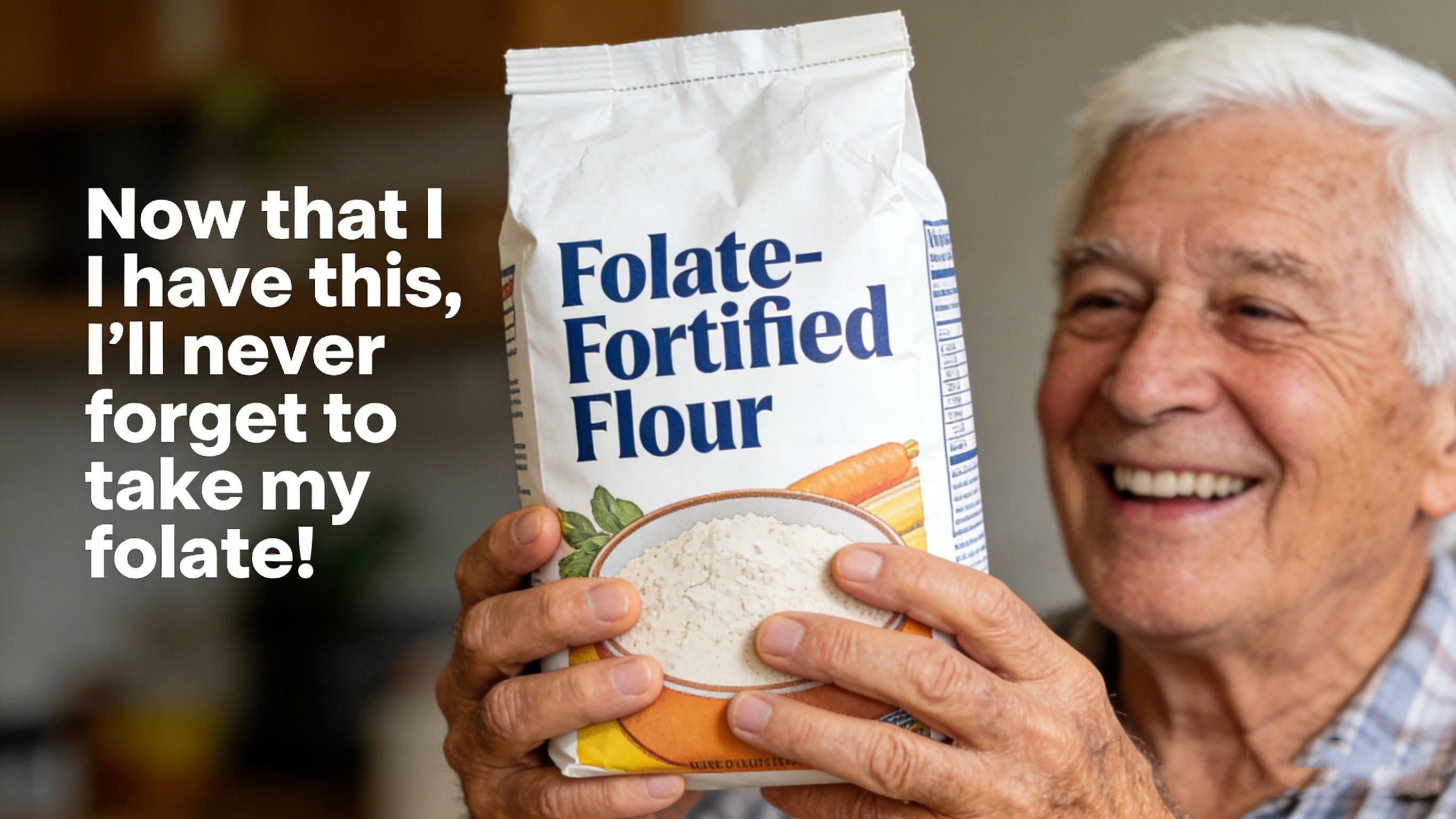
Folate-fortified flour integrates nutrition into three daily meals. The elderly can still eat noodles and steamed buns as usual, while gaining an extra layer of protection for their blood vessels. It adds no medication burden and requires no changes to living habits — this is the kind of health intervention that people can truly stick to.
According to the ‘Blue Book on China's Nutrition and Health Food Industry’, the domestic market size of nutrition and health food reached 588.5 billion yuan in 2022 and is expected to exceed 800 billion yuan by 2027. If folate-fortified flour can become a "standard item" on the elderly dining table, its growth potential will be enormous.
III. Office Workers: Under high pressure, staying up late, ordering takeout regularly — they badly need "effortless nutrition supplementation".
It’s no secret that more than 70% of office workers suffer from sub-health. Long overtime hours, takeout meals, and relying on coffee to get through the day have led to widespread deficiencies in vitamins, especially B vitamins and folate. But young people have one trait: they resist taking pills, yet are willing to spend more on a decent meal.
Folate-fortified flour can be made into a variety of forms: handmade noodles at high-end business restaurants, upgraded staple foods in corporate canteens, pre-made pastries in white-collar bento boxes. It can even be made into frozen dumplings — a quick boil makes a nutritious meal.
The size of China's prepared food market has exceeded 500 billion yuan, and workplace health foods are growing at an annual rate of over 25%. Folate-fortified flour carries a health positioning while maintaining the universality of staple foods, making it nearly barrier-free to enter this market segment.
IV.Chronic Disease Management: A "Dietary Tool" Long-awaited by Hospital Nutrition Departments
There are more than 300 million people living with chronic diseases in China. Doctors repeatedly stress the importance of nutritional intervention, yet patients often fail to maintain it at home. No one can stick to eating boiled vegetables every day, nor can anyone take nutritional powders as a substitute for regular meals.
Hospital nutrition departments have long been searching for a product that is convenient, ordinary, well-received by patients, and truly effective. Folate-fortified flour meets all these requirements. After prescribing it, doctors can simply tell patients, “Just steam steamed buns at home as usual,” which will greatly improve patient compliance.
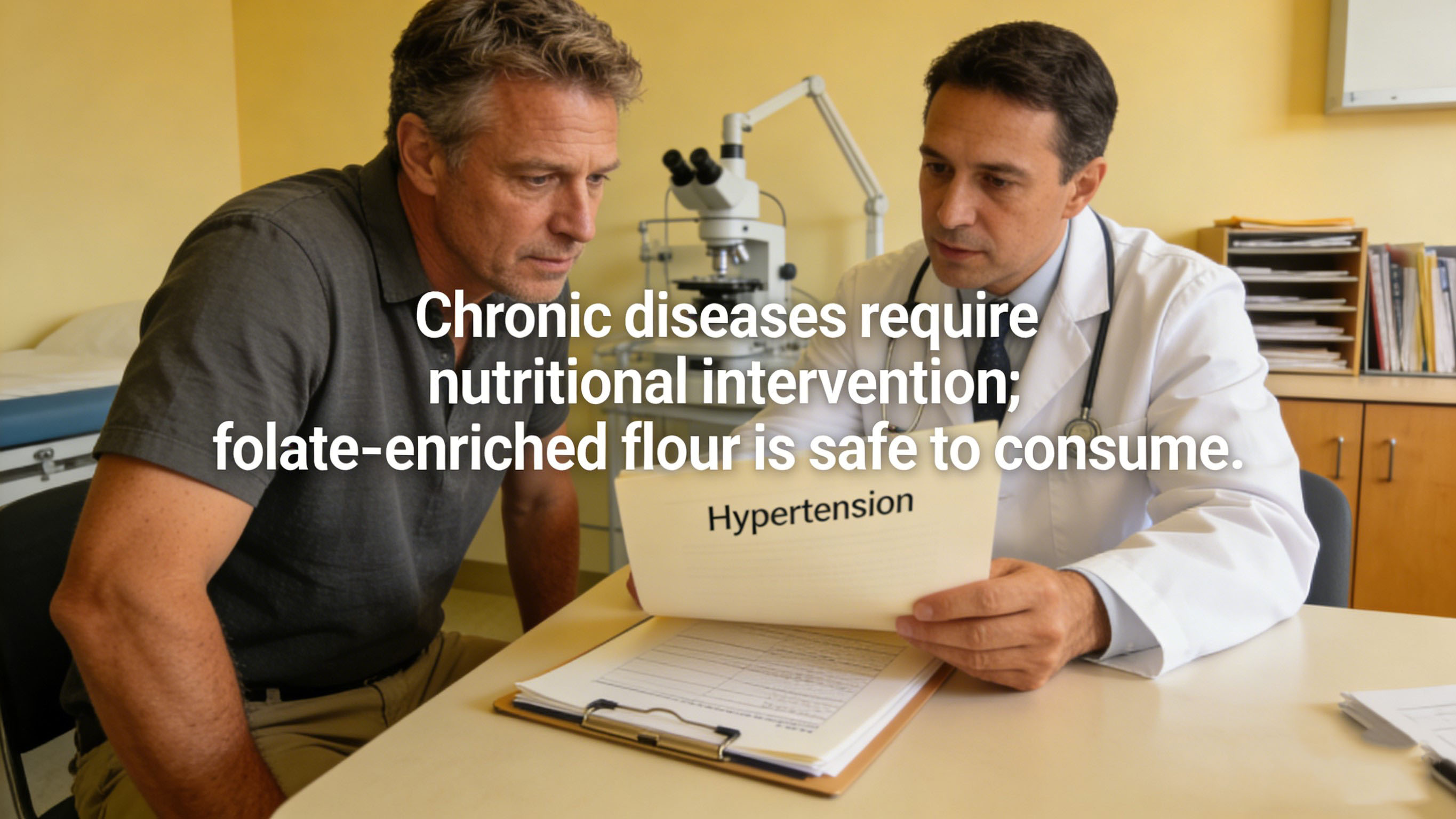
China's chronic disease management market exceeds 2 trillion yuan, and the development of hospital nutrition departments is accelerating. If folate-fortified flour can be included in hospital procurement catalogs, even as a pilot product, it will represent a huge breakthrough.
V.Child Development: Parents are willing to pay for "good nutrition," but it has to be smart eating.
Picky eating and unbalanced diets are extremely common among children today, leading to persistently high rates of micronutrient deficiencies. Parents are setting increasingly high standards for children’s food: it must be safe, nutritious, and best of all, appealing to kids.
Folate-fortified flour can be made into colorful little steamed buns, cartoon-shaped buns, and animal-shaped thin noodles. Folate can even be combined with iron, zinc and other nutrients to create a formulated flour for children.
How big is China's children's food market? Just look at the prices of children's dumplings and children's dried noodles in supermarkets — parents never hesitate to spend money on their kids. Besides, such products have an extremely high repurchase rate. Once children like them, parents will buy them almost every week.
For flour producers, this may be the only chance to break out of the price war
Let’s talk again to friends in the flour industry.
How tough is China’s wheat flour market right now? Capacity utilization is less than 60%, with large amounts of equipment sitting idle. Gross margins for standard flour stand at only 5% to 8%, and even lower in some cases. Everyone is making nearly identical products, so in the end they can only compete on price — you cut by a dime, I cut by two, and no one makes any profit.
The emergence of folate-fortified flour can bring about at least three tangible changes.
First, it will finally be possible to sell at a higher price.
While ordinary flour only satisfies basic hunger, folate-fortified flour adds the value of "health protection". We can refer to the experience of functional flour in Japan, where such products are sold at several times the price of regular flour. Domestic functional rice, such as germ rice, also sells for two to three times the price of ordinary rice. Consumers are not unwilling to spend more — you just need to give them a reason to do so.
And folate-fortified flour is exactly that reason.
Second, brands can truly establish themselves.
In a homogenized market, the first mover gains the advantage. If you take the lead in launching a recognized folate-fortified flour, consumers will associate you with being the "pioneer of active folate staple foods". Furthermore, if you establish a strategic partnership with core raw material suppliers such as Magnafolate, you will receive support spanning raw materials, technology, and joint marketing, making it difficult for latecomers to replicate.
Third, sales channels will suddenly expand.
Traditional flour is limited to supermarkets, grocery stores, and wholesale markets, where prices are transparent and profit margins are thin. However, folate-fortified flour can enter maternity and baby stores, pharmacies, clinics, hospital nutrition departments, as well as corporate canteens, high-end restaurants, and the gift market. These channels are completely inaccessible to conventional flour, yet wide open for functional staple foods.
Besides, government policies are lending a helping hand. New regulations introduced in 2025 have approved the use of Magnafolate in wheat flour, removing all legal barriers. The "Healthy China 2030" initiative has elevated nutritional intervention to a national strategy, with staple food nutritional fortification as a key focus. Enterprises that take the lead are highly likely to secure government project support and even participate in the formulation of industry standards.
Why now? Why not before, or later?
Some may say: The concept of folate-fortified flour was proposed many years ago — why is it only now considered feasible?
In the past, it truly wasn’t achievable, and the reason is straightforward.
First, the raw materials were inadequate. Folic acid requires conversion by the human body, yet a large proportion of Chinese people have metabolic disorders — taking it has little to no effect.
Second, it was restricted by regulations. Active folate had long not been approved for use in wheat flour, making production impossible even if desired.
Third, the market was not ready. In previous years, people were satisfied with simply having enough to eat. Asking them to spend more on functional flour fell on deaf ears.
Now things are different.
The emergence of Magnafolate represents a genuine technological breakthrough. This naturalization folate can be directly absorbed without metabolic conversion. Moreover, it exists in a stable Form C crystal structure, which is heat-resistant and processing-stable. Flour mills can produce fortified flour using their existing equipment, with no additional investment required.
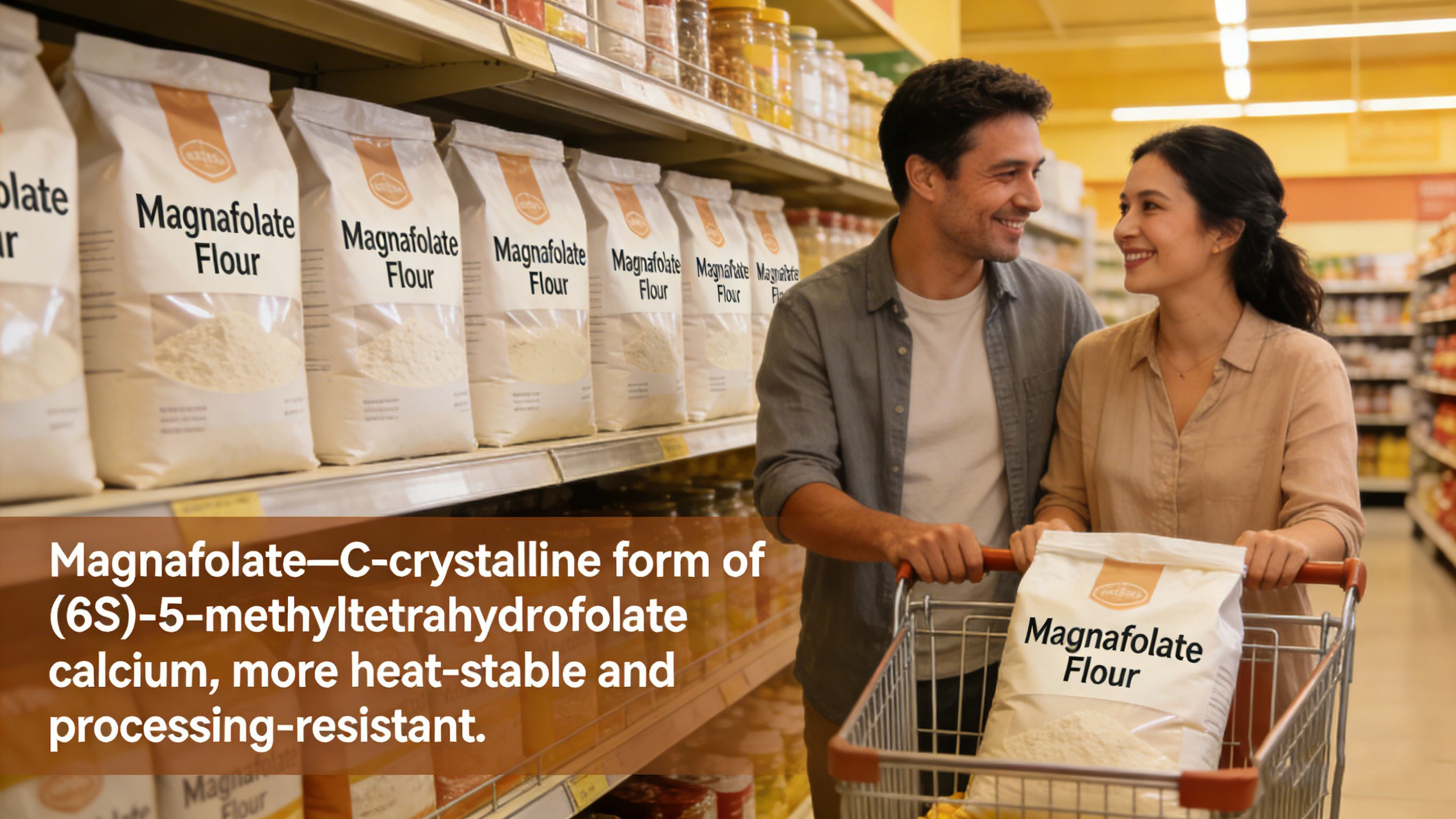
In 2025, regulations were officially liberalized, clearing a legitimate path to market. Consumer health awareness has also risen — after the past few years, people are willing to pay a reasonable premium for safer, more reassuring food.
This window of opportunity will not stay open forever. In any emerging market, the first-mover advantage is critical. By the time others catch on, the best positions in branding, channels, and supply chains will already have been taken.
Final Thoughts
From having enough to eat to eating well, and from pursuing taste to pursuing health, China's staple food industry is undergoing a quiet yet profound transformation.
Folate-fortified flour is not simply "flour with folate added".
It is a technological breakthrough — Magnafolate Crystal C has solved a decades-long problem.
It is a product upgrade — shifting from selling raw materials to delivering health solutions.
It is a business model breakthrough — breaking away from price wars and entering new markets.
It is also a genuine public health initiative — enabling 1.4 billion Chinese people to supplement nutrition through daily meals.
For flour producers, this is an opportunity to move from a crowded red ocean to a promising blue ocean.
For ordinary consumers, this is a simple way to benefit without having to change their daily habits.
Magnafolate mentioned in this article refers to naturalization folate (Calcium 6S-5-Methyltetrahydrofolate, Form C crystal), which has been granted patents in China, the United States, the European Union, Japan, South Korea and many other countries.
Patent Number: CN201410280541.4, US9150982, EP2805952, KR10-1694710, JP6166736, CA2861891, IN342588


 Online Service
