
 Español
 Português
  русский
  Français
  日本語
日本語  Deutsch
  tiếng Việt
  Italiano
  Nederlands
  ภาษาไทย
  Polski
  한국어
한국어  Svenska
  magyar
  Malay
Malay  বাংলা ভাষার
  Dansk
Dansk  Suomi
Suomi  हिन्दी
  Pilipino
  Türkçe
  Gaeilge
  العربية
  Indonesia
  Norsk
Norsk  تمل
تمل  český
český  ελληνικά
  український
  Javanese
  فارسی
فارسی  தமிழ்
தமிழ்  తెలుగు
  नेपाली
  Burmese
  български
  ລາວ
ລາວ  Latine
  Қазақша
  Euskal
  Azərbaycan
  Slovenský jazyk
  Македонски
  Lietuvos
  Eesti Keel
  Română
  Slovenski
  मराठी
मराठी  Srpski језик


Sarah Lin is 31 and has been trying to conceive for six months.
She has never stopped taking folic acid.
The bottle sits beside the dining table. After her morning milk, she takes one almost without thinking. Over time, it has become as routine as brushing her teeth.
At every checkup, she spends a long time looking over her lab report. As long as no glaring red flags appear, she feels a little more at ease.
So when her doctor mentioned "red blood cell folate" and "homocysteine" at this follow-up appointment, she paused.
"But I've been taking folic acid all along."
The doctor did not rush to a conclusion. Instead, she asked Sarah to bring in her previous supplement records and information about her diet. She also recommended reviewing Sarah's red blood cell folate, homocysteine, and vitamin B12 levels.
Holding the lab report, Sarah had only one thought:
I'm just taking folic acid. Why does it involve so many tests?
Yet this has never been simply about one meal, or necessarily one supplement.
Red blood cell folate reflects folate stores built up over the past several months. Think of it as a ledger that is updated slowly. Eating a few extra bites of leafy greens yesterday, or taking a folic acid tablet today, will not change the number overnight.
That is an important reminder for many people preparing for pregnancy:
It is not enough to ask whether you are supplementing. You also need to know how much your body has actually stored.
1. Why Taking It Does Not Always Mean You Have Enough: Three Easily Overlooked Factors
1.1 A lab report without red flags does not necessarily mean your stores are sufficient
Congenital heart defects are one category of birth defects that deserves ongoing attention.
Folate nutritional status during the periconceptional period is associated with the early development of the fetal nervous and cardiovascular systems. The evidence linking folate with neural tube development is currently more robust.
It may sound far removed from everyday life. For someone trying to conceive, though, it comes down to something quite simple:
Build a solid nutritional foundation early. Do not wait until the last minute.
The World Health Organization has indicated that red blood cell folate concentrations of at least 906 nmol/L in women of reproductive age are associated with a lower risk of neural tube defects.
Red blood cells live for about 120 days. Because they remain in the body for so long, their folate content can better reflect folate stores over a period of time.
Serum folate is different.
It responds more quickly to recent diet and supplement use. What you ate today, and whether you have been supplementing consistently lately, can both affect the result.
One measure is more about the present; the other looks back over the past few months.
Neither is inherently more important. They simply answer different questions.
Sarah had previously focused mainly on serum folate. Her level was not low, so she assumed everything was fine.
This time, the assessment showed her a different picture: her red blood cell folate had not yet reached the recommended reference level, while her homocysteine fell within a range that called for continued review alongside her overall nutritional status.
A lab report without an alarm does not mean every step in the utilization pathway is running smoothly.
Sometimes the issue is not whether folate gets through the door. It is whether the body can properly handle what comes next.
1.2 Once folate enters the body, it still has to go through another step
What people commonly call "regular folate" usually refers to synthetic folic acid, or FA.
After entering the body, folic acid cannot immediately participate in one-carbon metabolism. It must first undergo enzyme-mediated conversion into forms the body can use, including 5-methyltetrahydrofolate.
The MTHFR gene is involved in this conversion process.
MTHFR C677T polymorphism is relatively common among the Han Chinese population. Enzyme activity can vary by genotype, and people with the TT genotype may have lower activity of the relevant enzyme than those with the CC genotype.
That said, a genotype is not a diagnosis.
Finding a particular genotype does not automatically mean someone is folate deficient, nor does it mean there is a health problem. It is simply one clue a clinician may consider when assessing folate utilization efficiency.
As Sarah listened to the explanation, she looked down at the bottle she had been taking all this time.
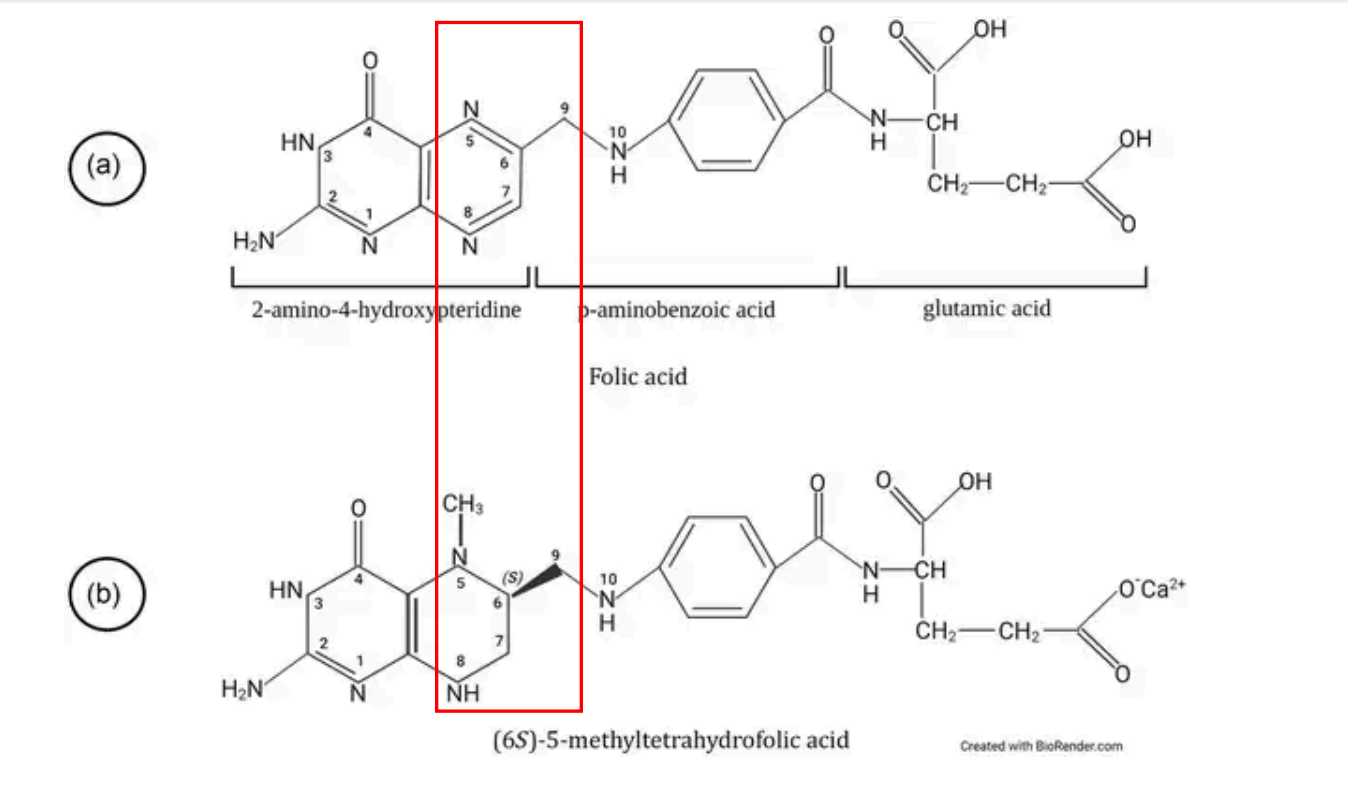
Taking it is not the same as completing the whole process.
Regular folic acid is more like a raw material. Active folate is closer to a finished product that has already been processed.
For some people, the "production line" runs efficiently. Raw materials go in and are quickly processed, distributed, and used.
For others, the process may move more slowly. The same amount of raw material may not yield the same amount of usable folate within the same period of time.
The difference may lie in that conversion step.
1.3 Building stores takes time
Red blood cell folate does not change on a report the day after you start supplementing.
Sarah had considered taking extra folic acid for a few days before her next follow-up, hoping to bring the number up.
Her doctor simply smiled.
"You do not need a last-minute push. Just take it consistently."
Red blood cell production, maturation, and renewal all take time.
For people who have just started trying to conceive, who have supplemented inconsistently in the past, or whose diets have not provided many folate-rich foods, improving folate nutritional status is generally something to assess over months.
Three days of supplementation cannot earn the body a stamp of approval saying that adequate stores have been established.
The repeated emphasis on timing during preconception is not meant to create anxiety.
Early embryonic organ development happens very early. The practical value of assessing nutritional status in advance is to give the body time to build stores, rather than discovering there is no preparation in place once the need is already immediate.
For people who are already pregnant, what to supplement, how much to take, and whether further testing is needed should be determined by an obstetrician or nutrition professional based on individual medical history.
"What everyone else takes" may not be appropriate for you.
2. Research Focuses on How Active Forms Are Used
Randomized studies have compared calcium salt of 6S-5-methyltetrahydrofolate with synthetic folic acid.
One randomized trial in Canada enrolled women who were 8 to 21 weeks pregnant. One group received 0.625 mg of calcium salt of 6S-5-methyltetrahydrofolate, while the other received 0.6 mg of synthetic folic acid.
After 16 weeks, red blood cell folate concentrations were 1826 +/- 471 nmol/L and 1998 +/- 421 nmol/L, respectively. Both were above the commonly used reference threshold of 906 nmol/L. No statistically significant difference in serum folate was observed between the two groups.
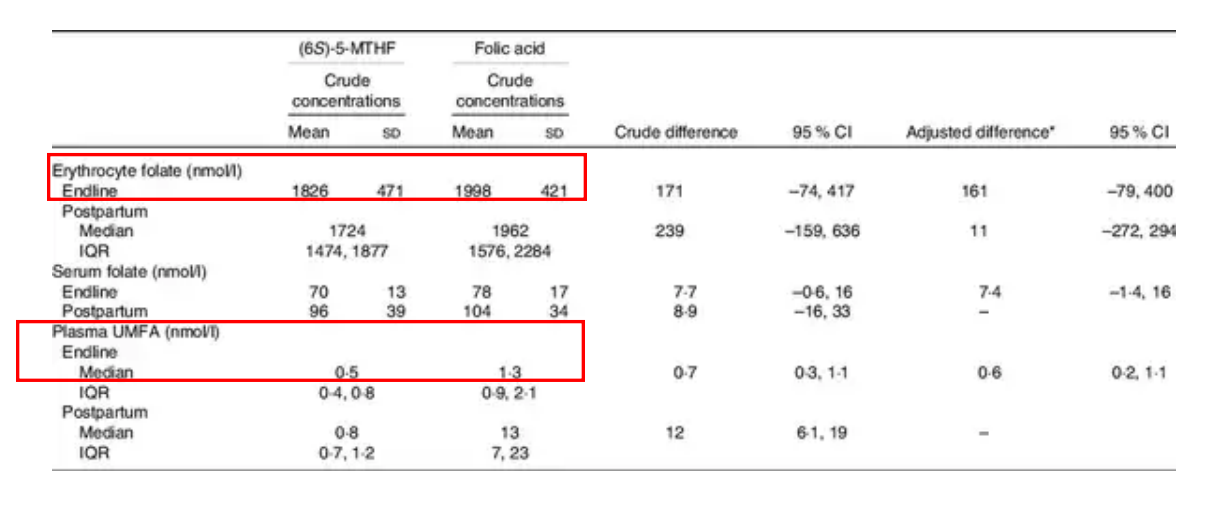
The study also found lower levels of unmetabolized folic acid in maternal plasma among participants taking active folate.
Still, it is important to separate what a study can show from what it cannot.
These findings support calcium salt of 6S-5-methyltetrahydrofolate as one possible folate source for maintaining folate status during pregnancy.
The trial was conducted in women who were already pregnant, however. Whether its conclusions can be directly extended to the preconception period still requires professional judgment based on the individual.
It also does not mean that:
A particular ingredient can prevent or treat a particular birth defect.
People differ. Dietary patterns, vitamin B12 status, supplement dose, timing of use, and genetic background can all affect outcomes.
In medical nutrition, there is rarely a single pill that solves every problem.
3. So What Should You Do? Returning to Sarah's Assessment Pathway
Sarah's next steps did not revolve around one specific product.
Her doctor asked her to first fill in a few gaps:
What does she usually eat? How long has she taken folic acid? What dose does she take each time? Has she ever stopped in between?
Those details would then be reviewed together with her red blood cell folate, homocysteine, and vitamin B12 results.
If there is a family history, a history of recurrent adverse pregnancy outcomes, or existing genetic test results, a qualified professional can then determine whether the folate source or dose needs to be adjusted.
Her doctor also offered some context: if the review shows that the conversion step is inefficient—for example, if an MTHFR genotype suggests lower enzyme activity, or if regular folic acid has not built up enough red blood cell folate—then "switching the folate source" may come up for discussion. In such cases, a doctor might mention active folate, the form that skips the body's own conversion and is directly usable.
"There are quite a few active folate ingredients on the market. One common form is calcium salt of 6S-5-methyltetrahydrofolate. Magnafolate is a brand in this space, and professionals can look up its standards and patent documentation," the doctor said, deliberately measured. "But whether you should switch, to which one, and by how much—that all has to wait until your results are in, and we look at them together."
Sarah put the report into her bag and stopped rushing to label her own situation.
The follow-up results would take time.
At least she now understood one thing: the point of clinical assessment is not to place everyone on the same supplement path.
It is to identify whether conversion, storage, or insufficient related nutrients may be the part that needs closer attention.
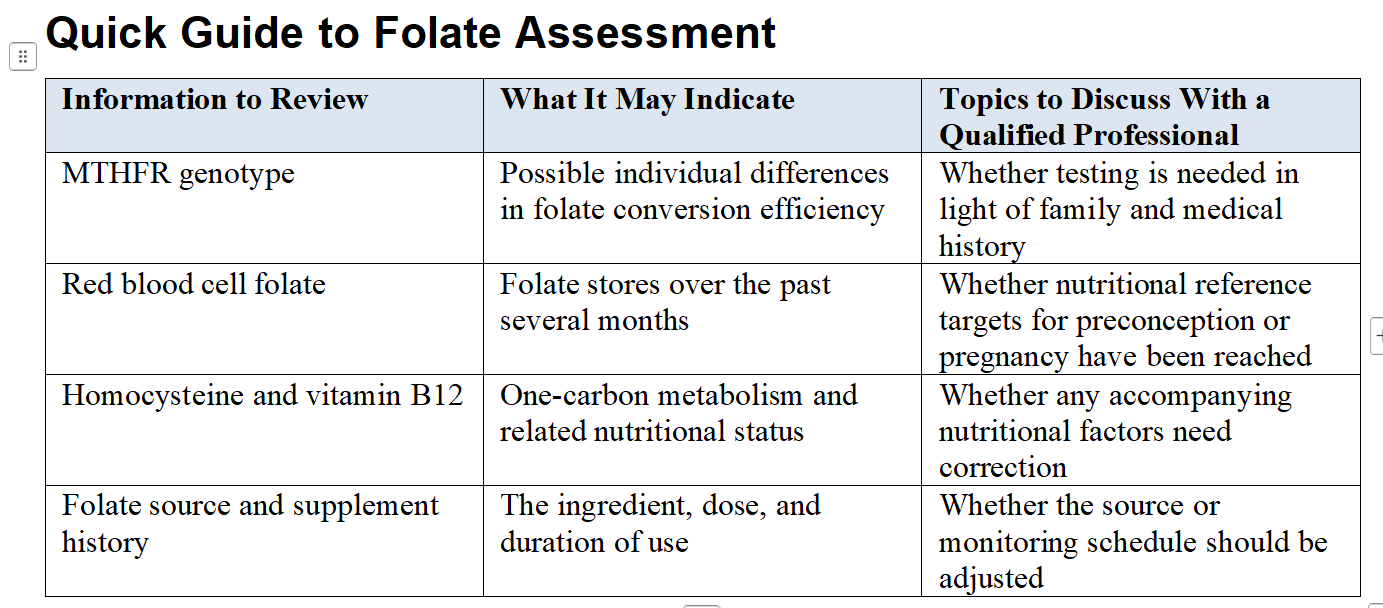
Regular folic acid is a raw material. Active folate is a finished product.
For some people, the difference appears after that raw material enters the production line.
References
[1] Cochrane KM, Elango R, Devlin AM, et al. Supplementation with (6S)-5-methyltetrahydrofolate appears as effective as folic acid in maintaining maternal folate status while reducing unmetabolised folic acid in maternal plasma: a randomised trial of pregnant women in Canada[J]. British Journal of Nutrition, 2024, 131: 92-102. doi:10.1017/S0007114523001733.
[2] Yang B, Liu Y, Li Y, et al. Geographical Distribution of MTHFR C677T, A1298C and MTRR A66G Gene Polymorphisms in China: Findings from 15357 Adults of Han Nationality[J]. PLoS ONE, 2013, 8(3): e57917. doi:10.1371/journal.pone.0057917.
[3] Lian Z, Liu K, Gu J, Cheng Y, et al. Biological characteristics and applications of folate and 5-methyltetrahydrofolate[J]. China Food Additives, 2022, Issue 2.
[4] Lian Z, Chen H, Liu K, et al. Improved Stability of a Stable Crystal Form C of 6S-5-Methyltetrahydrofolate Calcium Salt, Method Development and Validation of an LC-MS/MS Method for Rat Pharmacokinetic Comparison[J]. Molecules, 2021, 26(19): 6011. doi:10.3390/molecules26196011.
Important Notice
Magnafolate® is supplied solely as an active folate ingredient, calcium salt of 6S-5-methyltetrahydrofolate. It does not provide diagnosis or treatment advice directly to consumers.
All folate supplementation decisions should be made under the guidance of a qualified physician or nutritionist.
The individuals described in this article are fictional and are used only to help readers understand the underlying science. The details and data in the case are within commonly referenced clinical ranges.
Any causal statements in this article are strictly limited to conclusions supported by the cited literature. Nothing in this article constitutes a promise of product efficacy.


 Online Service
