
 Español
 Português
  русский
  Français
  日本語
日本語  Deutsch
  tiếng Việt
  Italiano
  Nederlands
  ภาษาไทย
  Polski
  한국어
한국어  Svenska
  magyar
  Malay
Malay  বাংলা ভাষার
  Dansk
Dansk  Suomi
Suomi  हिन्दी
  Pilipino
  Türkçe
  Gaeilge
  العربية
  Indonesia
  Norsk
Norsk  تمل
تمل  český
český  ελληνικά
  український
  Javanese
  فارسی
فارسی  தமிழ்
தமிழ்  తెలుగు
  नेपाली
  Burmese
  български
  ລາວ
ລາວ  Latine
  Қазақша
  Euskal
  Azərbaycan
  Slovenský jazyk
  Македонски
  Lietuvos
  Eesti Keel
  Română
  Slovenski
  मराठी
मराठी  Srpski језик


In late July, news alleging that prune juice served on China Southern Airlines flights caused “over a hundred passengers queuing for restrooms due to diarrhoea” spread widely across social media. China Southern Airlines later issued an official denial stating the report was false. We will not jump to conclusions about exactly what happened. Even so, this news offers an interesting angle for discussion: prune juice and folic acid, seemingly unrelated, both illustrate how the human body processes ingested substances. Some people experience rapid intestinal response shortly after drinking prune juice, barely making it to the restroom in time.
Others take folic‑acid supplements, yet their bodies must first shuttle the nutrient through metabolic pathways for step-by-step processing before it can become biologically usable. The human body is not an assembly-line machine. No button press triggers instant full-speed operation. Individuals inherently differ in absorption, transformation, and metabolic efficiency. Drawing on the prune-juice story, this article explains why active folate garners attention among certain groups and demystifies what Magnafolate actually is.
Prune Juice: When the Body Cannot Keep Up with Substrate Load
Many attribute prune juice’s laxative effect solely to its fibre content. While fibre plays a role, sorbitol is the key compound that often forces the gut into overdrive. Once sorbitol reaches the large intestine, it raises luminal osmotic pressure and draws water into the intestinal cavity. Increased water softens stool and stimulates intestinal peristalsis. For susceptible individuals, this reaction can occur abruptly: one moment casually scrolling through a phone; the next, abdominal gurgling sets in and thoughts turn urgently toward locating the nearest toilet.
Research indicates abdominal bloating and bowel sounds may develop in healthy adults with an intake of roughly 5 g of sorbitol; diarrhoea risk rises further above 10 g intake. A 2022 double-blind trial of 84 participants published in the American Journal of Gastroenterology confirmed prune juice improves chronic constipation. A 2019 study in the American Journal of Clinical Nutrition reported prune juice yields effects comparable to lactulose for mild constipation.
Still, gut responses vary greatly between individuals. Some develop discomfort after drinking half a glass, while others notice no gastrointestinal changes after several days of consumption. People living with chronic constipation frequently report this mismatch: prune juice works wonders for others yet produces no bowel response for themselves. Buyers should also exercise caution: some commercial products contain undisclosed laxative ingredients. Effective relief does not equal suitability for long-term reliance. Occasional gut support differs fundamentally from persistent pharmacological stimulation of bowel function. Prune juice exemplifies one extreme of bodily processing of exogenous substances: substrates arrive so rapidly that the gastrointestinal tract cannot perform gradual digestion and regulation. Physiological processes that should proceed sequentially are forced to rush.
Synthetic Folic Acid vs Active Folate: Another Type of Queue
If prune juice represents excessively rapid physiological response, synthetic folic acid sits at the opposite end of the spectrum. Most over-the-counter folate tablets contain synthetic folic acid (Folic Acid). Upon ingestion, it cannot participate directly in biological reactions. Instead, it enters the folate metabolic pathway and undergoes sequential conversion to form 6S-5-methyltetrahydrofolate (5-MTHF). This can be analogised to receiving a lock paired with an unfinished, rough-cast key. The key is not entirely useless, but must first go through a workshop for modification and fitting before it can unlock the lock.
MTHFR acts as one critical processing workshop within this pathway. Crucially, this “workshop” does not operate equally efficiently across all humans. Some individuals have robust enzyme function that completes conversion quickly.
In others, the metabolic pipeline runs slower. Constraints in substrate availability, overall nutritional status, or intrinsically low conversion capacity create metabolic bottlenecks.
MTHFR Enzyme and the C677T Polymorphism
The MTHFR gene C677T variant is common in human populations. Among Chinese populations, homozygous TT genotype accounts for approximately 25 %, with higher prevalence in northern regions; exact rates vary by geography and cohort.
Carriers of this genotype may exhibit reduced MTHFR enzymatic activity and impaired folate conversion efficiency. When taking identical doses of synthetic folic acid, some people complete biotransformation readily, while others experience metabolic backlogs. This phenomenon draws clinical attention to circulating unmetabolised folic acid (UMFA). Even so, a genetic report showing the C677T variant should not be interpreted as a definitive personal health verdict. This single locus does not alone dictate supplementation choices. Dosage, duration of intake, dietary patterns, vitamin B12 status, and overall physical condition collectively shape physiological outcomes. Human physiology is not governed by one simple genetic switch.
Active Folate: Skipping One Step in the Metabolic Queue
Is there a pre-processed, end-product form of folate available? Yes.
6S-5-methyltetrahydrofolate (5-MTHF), commonly termed active folate, is the biologically ready form utilised by human tissues. It circumvents the MTHFR‑dependent conversion step. To revisit the analogy: synthetic folic acid is the rough-cast key requiring workshop processing; active folate is the pre-fitted key ready for immediate use.
A 2010 review by Pietrzik and colleagues in Scientific Reports summarised pharmacokinetic differences between 6S-5-methyltetrahydrofolate and synthetic folic acid. The authors concluded 6S-5-methyltetrahydrofolate offers pharmacokinetic advantages due to direct absorption and utilisation.
A 2020 observational study by Clément, Menezo and colleagues enrolled 89 couples seeking fertility care. After supplementation with 6S-5-methyltetrahydrofolate, reductions in plasma homocysteine were observed among variant carriers:
Approximately 42.7 % reduction in homozygous carriers
Approximately 20.1 % reduction in heterozygous carriers
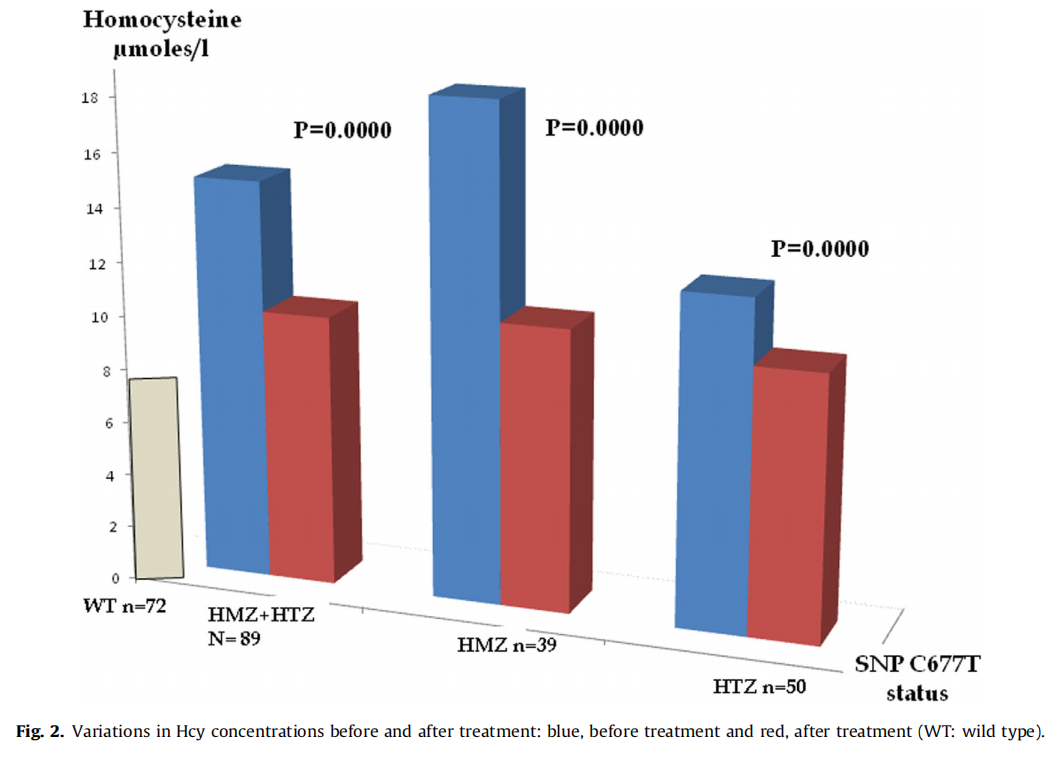
Homocysteine is linked to folate metabolism and serves as a biomarker for cardiovascular and pregnancy‑related risk. These findings suggest 6S-5-methyltetrahydrofolate merits consideration for supplementation strategies targeting individuals with suboptimal folate conversion capacity.
Additional Safety Observations
Experimental research reveals further distinctions between folate forms. In zebrafish models, high concentrations of synthetic folic acid induced pericardial oedema, reduced heart rate, and partial vascular developmental anomalies. Within equivalent dosage ranges, 6S-5-methyltetrahydrofolate calcium exhibited no comparable cardiovascular toxicity or embryonic developmental defects.
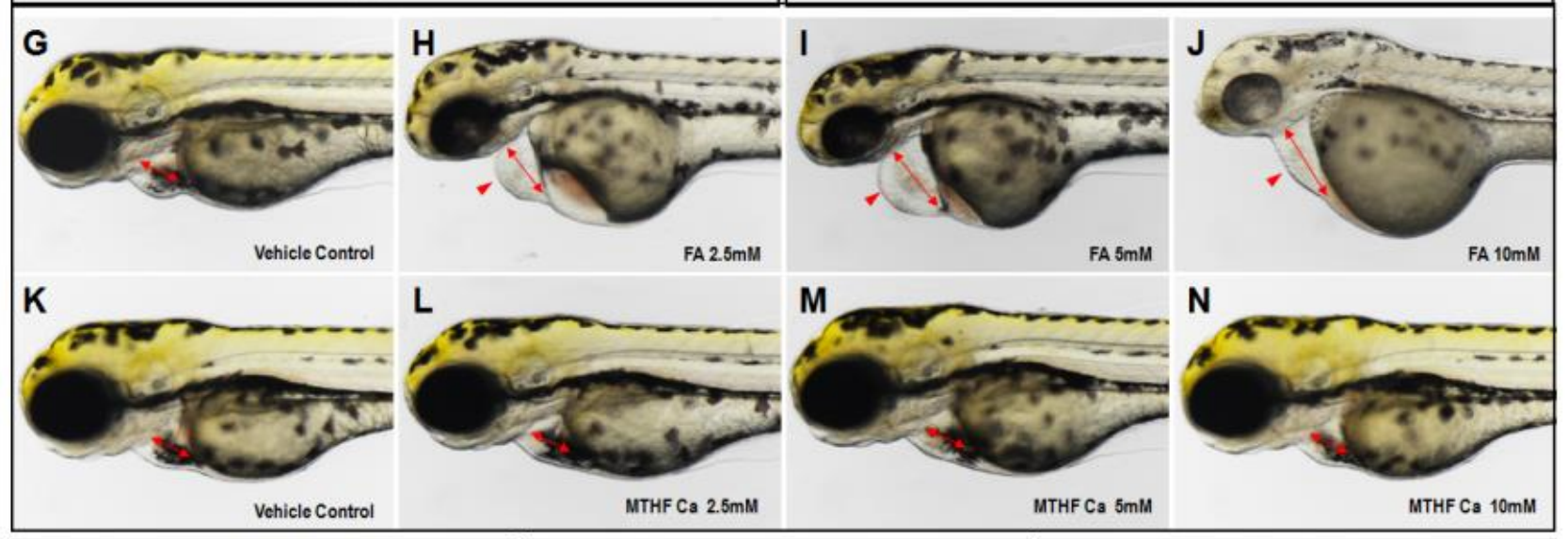
Note that zebrafish experimental results cannot be directly extrapolated to humans. Nonetheless, these observations demonstrate different folate moieties are not merely alternative product labelling; they exhibit measurable differences in safety profiles and in-vivo behaviour.
Who Should Pay Attention to This “Activation Queue”?
Mechanistic descriptions can feel abstract. Below are real-world populations for whom folate-form selection warrants consideration.
Women Planning Pregnancy or Who Are Pregnant
Folate requirements rise in early gestation. Efficient folate bioconversion is a key concern for many women attempting conception. This is especially relevant for those with short pre-conception preparation intervals, unplanned late pregnancy recognition, or concerns regarding folate metabolism. Always consult clinicians or qualified professionals; avoid self-medication based solely on online content.
Higher folate dosage does not guarantee better outcomes. Appropriateness outweighs excess.
Individuals with Elevated Homocysteine or Cardiovascular-Health Concerns
Active folate bypasses certain conversion steps and may represent one component of a nutritional support strategy. It cannot replace antihypertensive or lipid-modifying pharmacotherapy or standard clinical management. Patients should maintain blood‑pressure control, follow dietary recommendations, and sustain physical activity. Nutritional supplements cannot deliver “autonomous health management”.
Individuals Diagnosed with MTHFR Variants
Particularly TT-genotype carriers may experience diminished folate conversion efficiency. Direct supplementation with 6S-5-methyltetrahydrofolate bypasses this rate-limiting metabolic step.
A positive variant result is not equivalent to disease, nor does it mandate exclusive use of one folate preparation. Supplementation regimens should integrate dietary intake, laboratory findings, and individual medical history.
Older Adults
Age-related changes include modified dietary patterns, impaired gastrointestinal absorption, and shifting vitamin B12 status. When selecting folate supplements for older adults, consumers must look beyond “active folate” marketing claims. Key considerations include vitamin B12 sufficiency, chronic disease status, and concurrent medications.
Nutritional supplementation is not a trend‑driven practice; it targets identified nutritional gaps. Do not treat every health concern as a nail for the same supplement hammer.
None of the above implies synthetic folic acid is inferior, nor does it mean every person must switch to active folate. Rather, for select populations, active folate reduces reliance on individual endogenous conversion capacity, mitigating variability driven by genetic and physiological differences. Dosage, duration, and product selection should always follow professional medical advice.
What Exactly Is Magnafolate?
Having covered active folate, we now address Magnafolate.
Commercially available active folate is mostly supplied as calcium salt. Unfortunately, this compound has notable stability limitations. Active folate is chemically fragile: susceptible to degradation from moisture, heat, and long-term storage. Degradation can occur within the supplement container before ingestion, meaning consumers pay for a product that loses potency on the shelf. Magnafolate was developed to solve this stability challenge. It utilises patented C-form crystal technology: molecular packing and crystal-structure rearrangement stabilise active-folate molecules, analogous to loosely assembled components being securely fastened. This improves shelf stability and supports more consistent in-vivo release kinetics. Safety remains paramount for consumers. Oxidative impurities such as JK12A may form during active-folate manufacturing and storage and represent a recognised industry risk. The C-form crystal process is engineered to minimise such impurities. Safety assessments conducted by the Shanghai Centre for Disease Control and Prevention categorised the material as practically non-toxic, delivering an extra layer of safety assurance.
Two Extremes, One Core Physiological Principle
Prune juice and folate supplements appear unrelated, yet illustrate the same biological truth: processing ingested substances demands physiological time and regulation. Prune juice demonstrates the first “queue scenario”: bioactive compounds act so rapidly that bodily regulatory mechanisms cannot keep pace. Water influx into the intestinal lumen accelerates gut transit, skipping sequential physiological processing.
Synthetic folic acid represents the second “queue scenario”: multi-step biotransformation is required to generate biologically active folate. Metabolic queues lengthen for people with low conversion capacity.
Active folate offers an alternative approach: delivering the pre-converted metabolite to bypass rate-limiting steps.
Therefore, upon encountering headlines claiming “miracle foods cure all ailments” or “supplements everyone must take”, pause for critical reflection:
Is supporting evidence cited? Does the claim apply universally or only to specific subgroups? Are ingested substances fully metabolised, or stuck mid-physiological processing?
Human physiology does not rewrite its rules because of viral news stories. Our best strategy is to resist blind trends, evaluate evidence, and select interventions best suited to individual circumstances.
References
[1] Yang B, et al. MTHFR C677T polymorphism in Chinese Han population. PLOS ONE. 2013.
[2] Clément A, et al. MTHFR genotype and homocysteine‑lowering effect of 5-MTHF. J Gynecol Obstet Hum Reprod. 2020; PMID: 31446167.
[3] Cochrane KM, et al. (6S)-5-MTHF vs folic acid in pregnancy. Br J Nutr. 2024.
[4] Pietrzik K, Bailey L, Shane B. Folic acid and L-5-methyltetrahydrofolate: comparison of clinical pharmacokinetics and pharmacodynamics. Clin Pharmacokinet. 2010 Aug;49(8):535-48. doi: 10.2165/11532990-000000000-00000. PMID: 20608755.
[5] Lian Z, et al. Stability of 6S-5-MTHF calcium salt. Molecules. 2021.
[6] WHO. Guideline: Folic acid for reducing the number of neural tube defects. 2015.
[7] Panahi Y, et al. Prune juice versus senna for chronic constipation: a randomized controlled trial. J Gastrointestin Liver Dis, 2019, 28(3): 301-306. PMID: 31555302.
[8] Panahi Y, et al. Prune juice versus lactulose for chronic constipation in adults: a randomized controlled trial. Am J Clin Nutr, 2019.
[9] China Food News. Jinkang Hexin safeguards health across the life cycle with natural-source folate. 27 April 2026. https://www.cnfood.cn/article?id=2048574550954840066
[10] Xinhuanet Client. Integrating food fortification into daily diets: policy and technology drive accelerated progress in food fortification. 21 April 2026. https://app.xinhuanet.com/news/article.html?articleId=20260421b6c54036c6ad4c12934a893bef452fe5
Disclaimer: This article provides popular-science and industry-exchange content only and does not replace professional medical or nutritional advice. Dietary supplements cannot diagnose, treat, or prevent disease. Individuals who are planning pregnancy, pregnant, living with chronic disease, or taking medications should consult clinicians or qualified professionals prior to folate supplementation.


 Online Service
